
Last updated September 23, 2026
Free visual inspection and a written scope of work before any mitigation begins - photos, moisture readings, and drying logs go in your claim file
The scope we write is the scope we bill. Anything new gets shown to you, in writing, before we touch it.
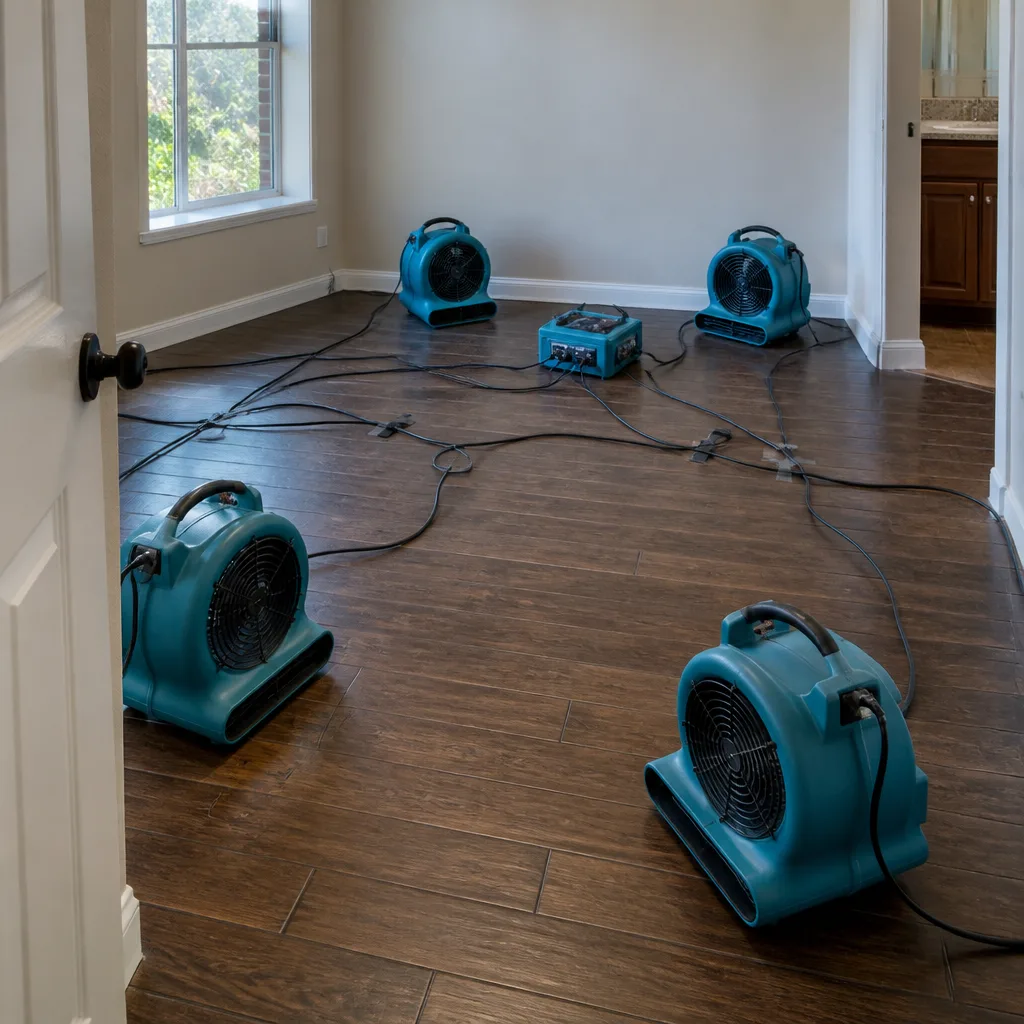
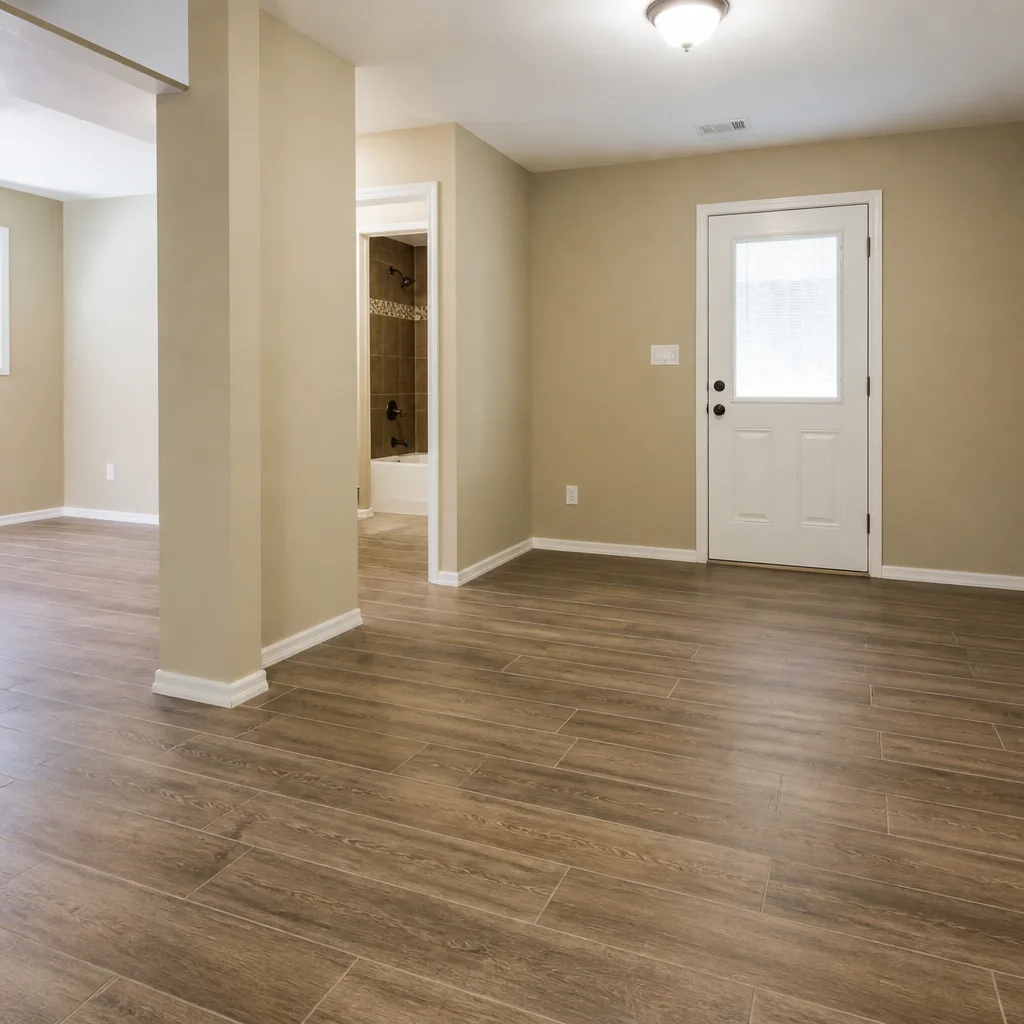
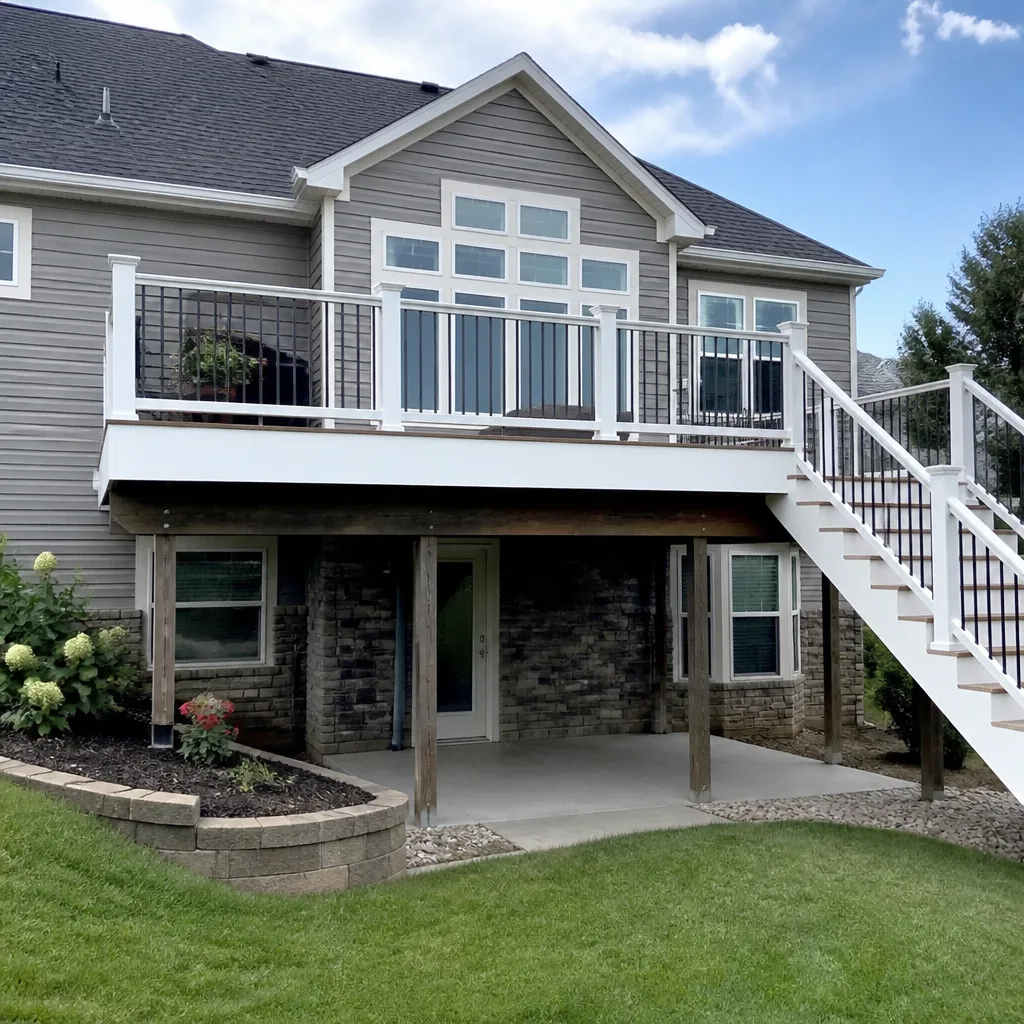
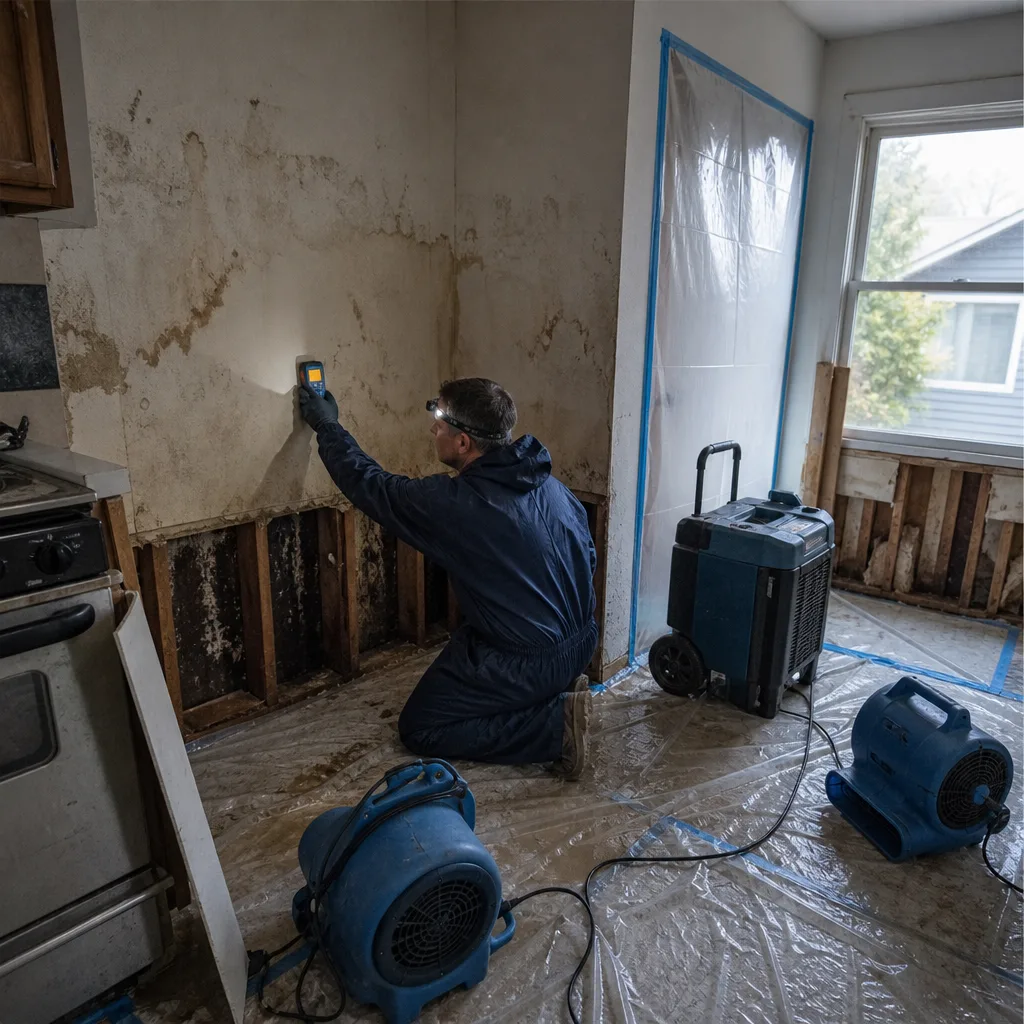 Before
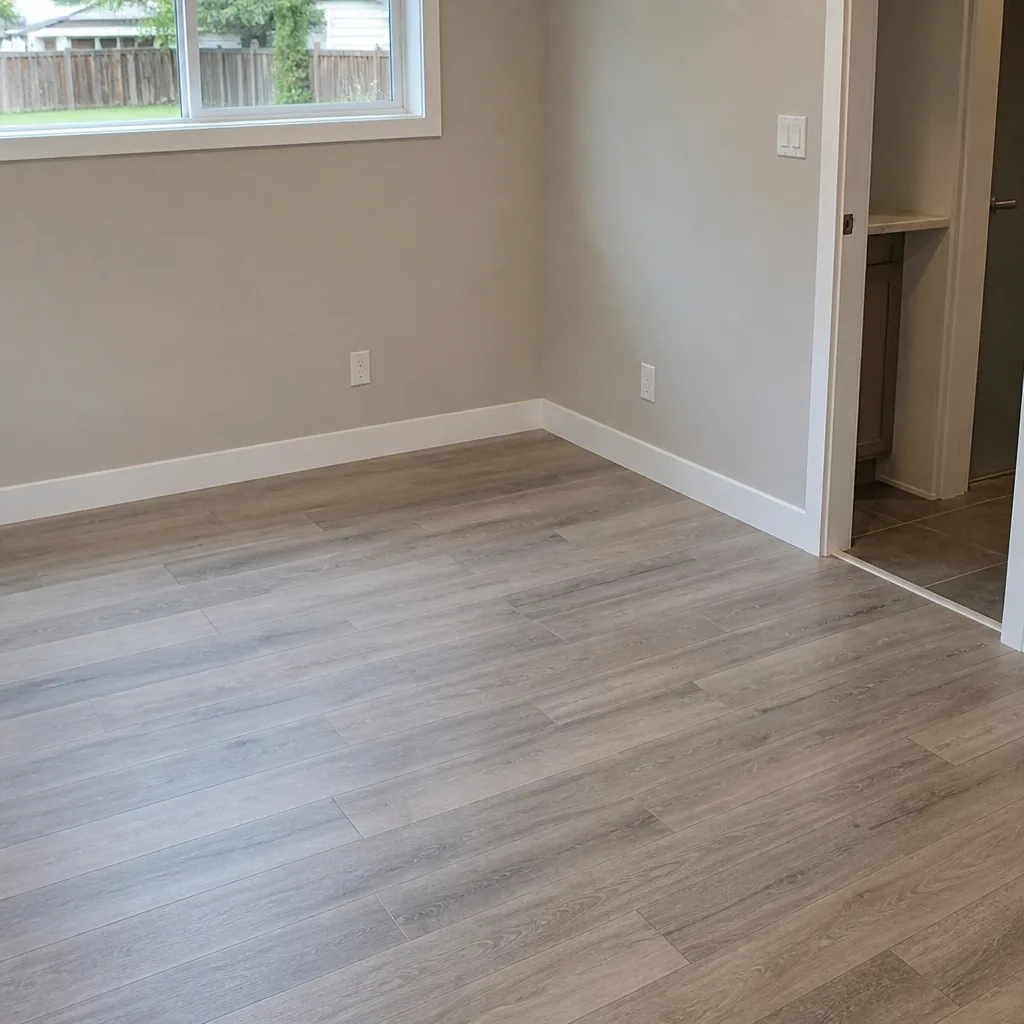 After
After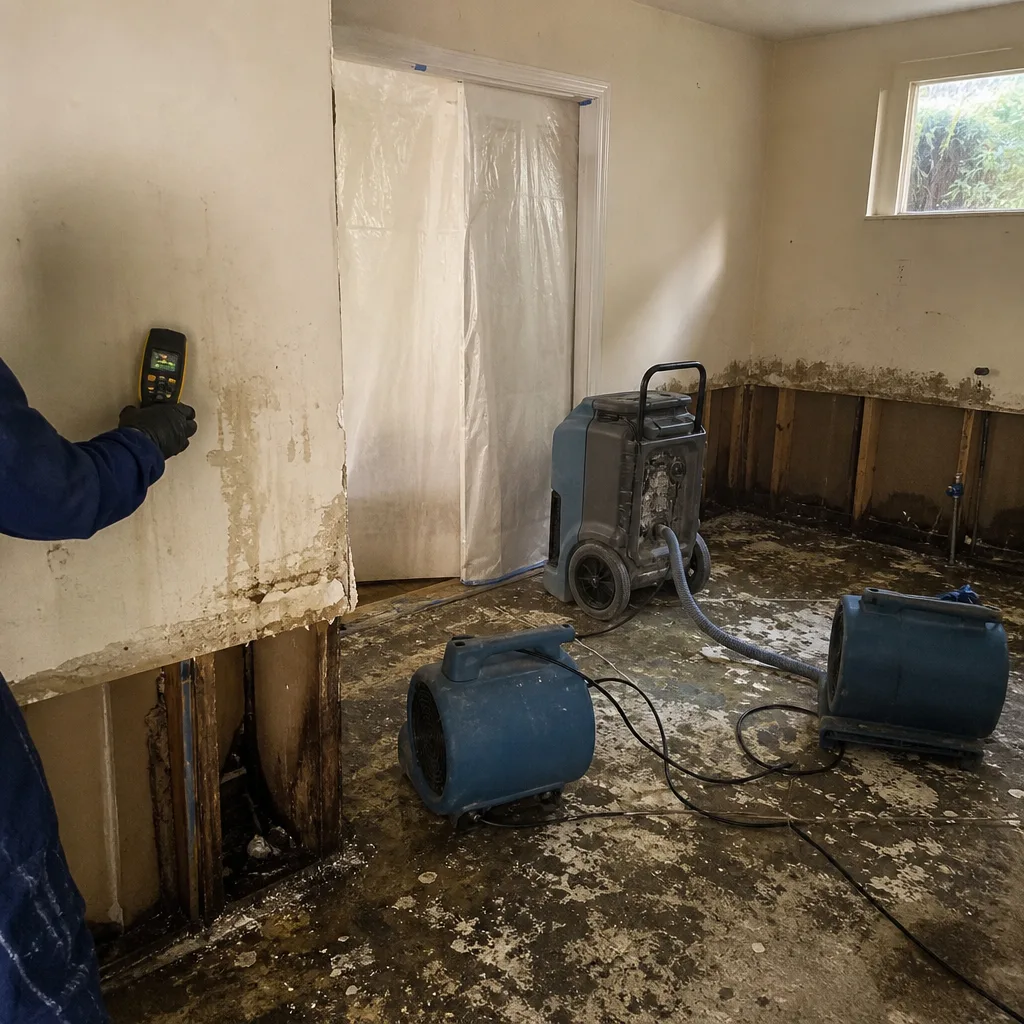 Before
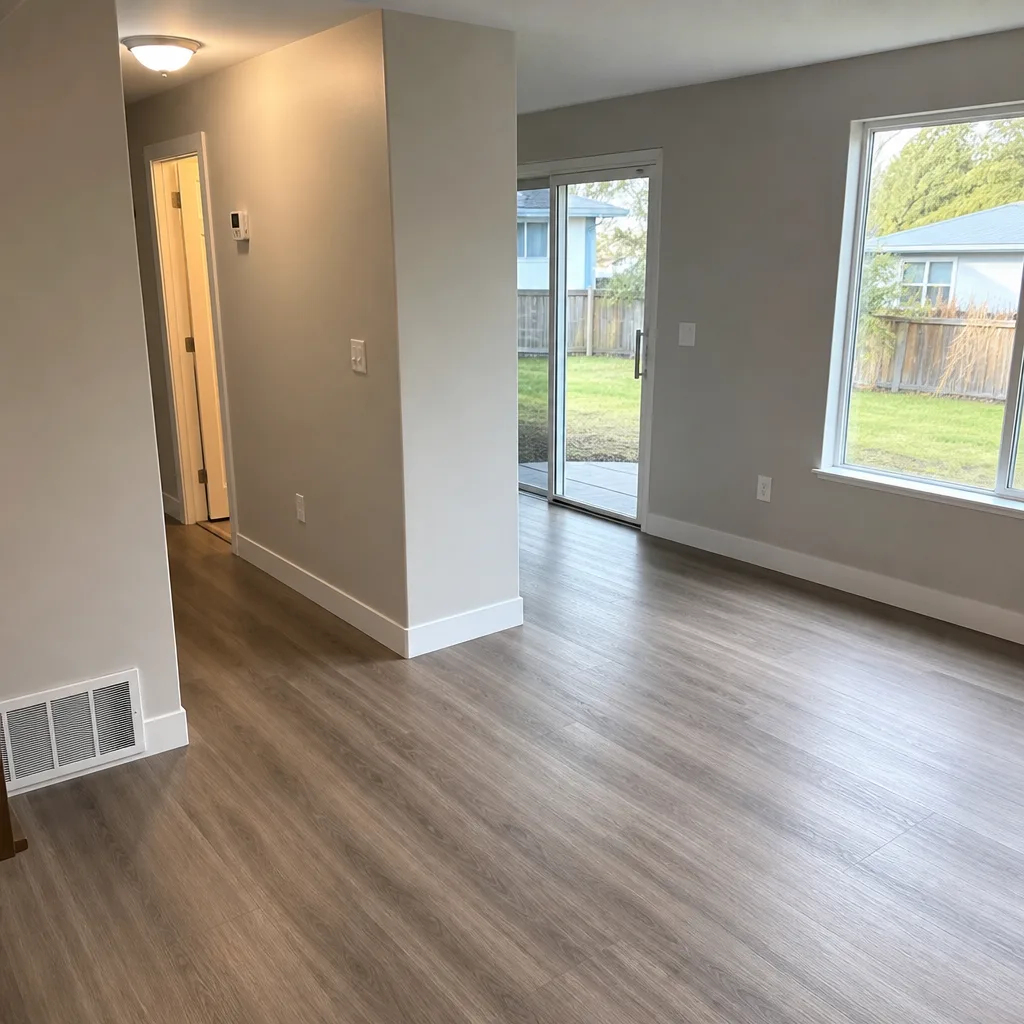 After
After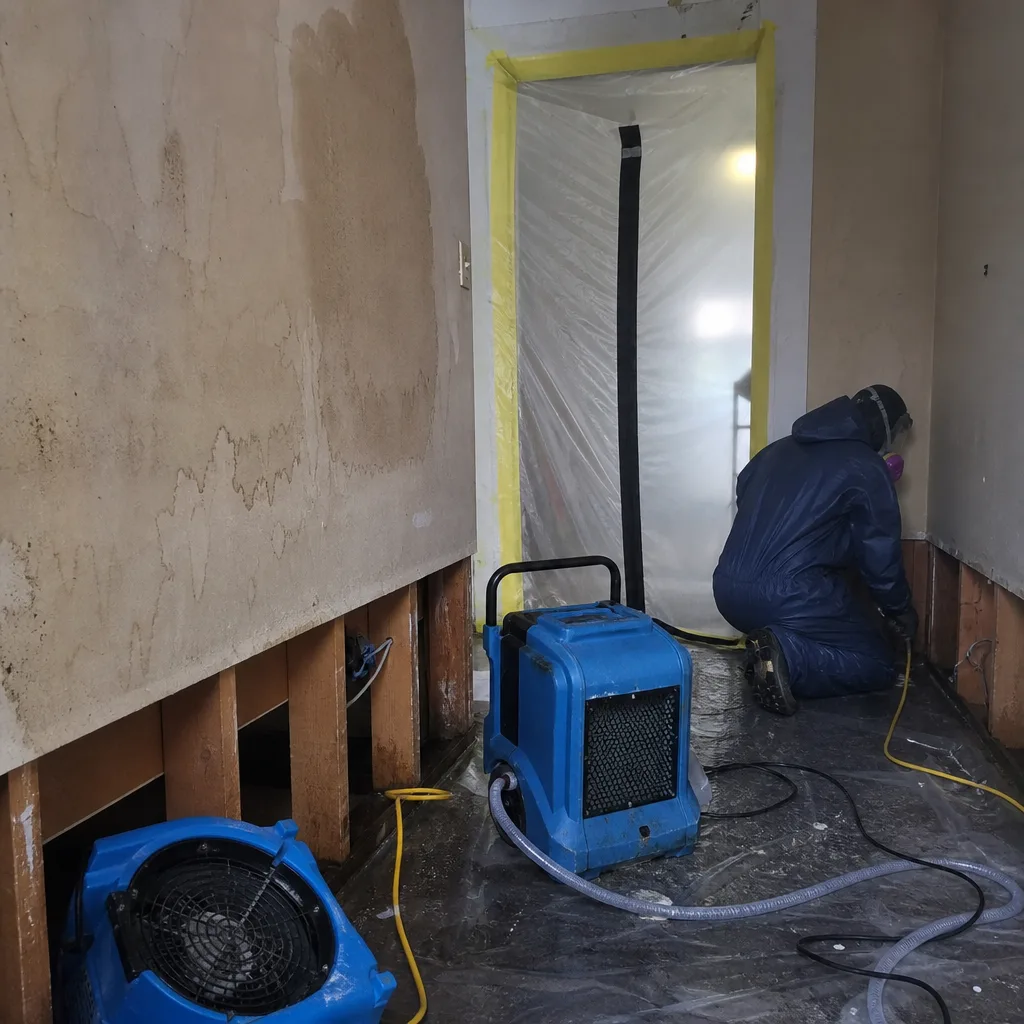 Before
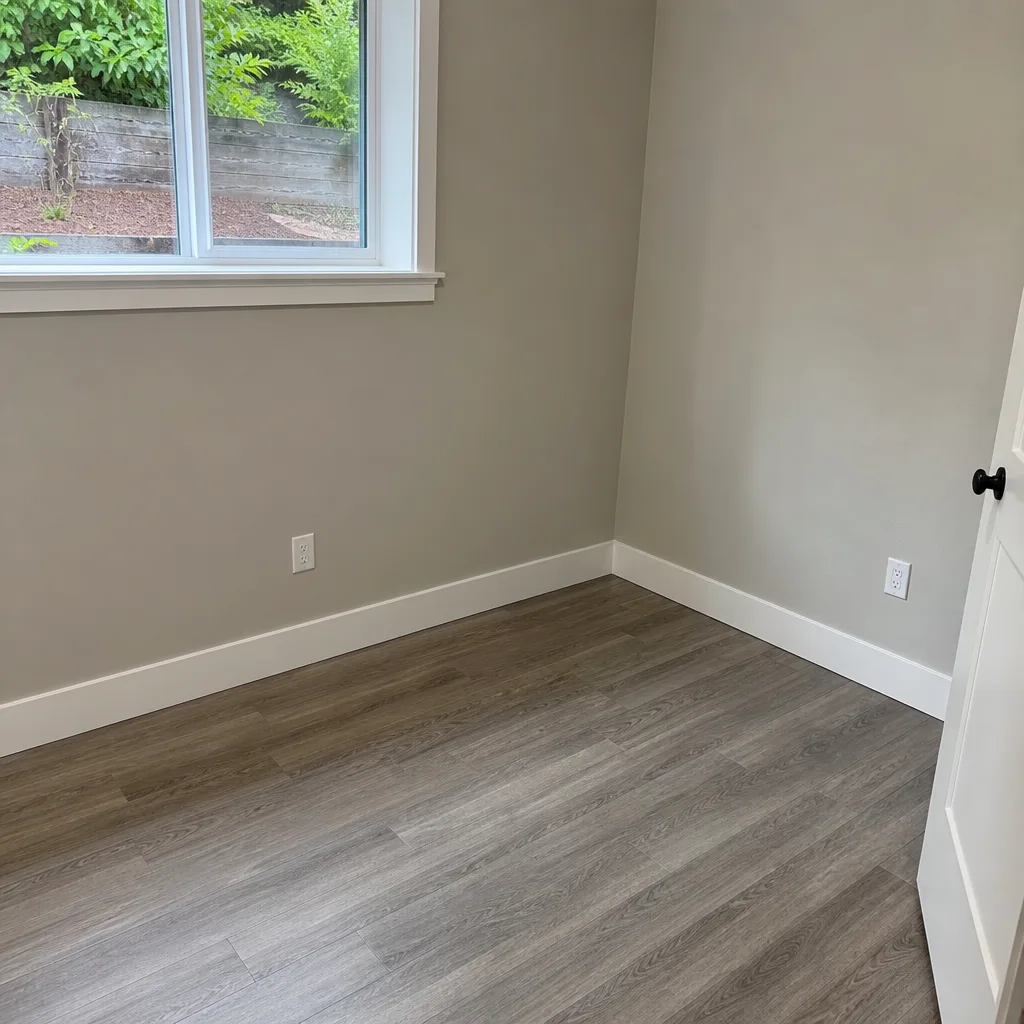 After
AfterHow to Hire a Damage Restoration Contractor in Renton: A Step-by-Step Guide
A contractor with 200 five-star reviews and no written scope-of-work policy will cost you more than a contractor with 40 reviews who hands you a moisture map before demo begins. Insurers don’t read Yelp. In Renton, where King County’s wet winters push water through aging slab foundations and the Cedar River watershed keeps basements chronically humid, the quality of your restoration contractor’s documentation determines whether your claim gets paid or denied. This guide-along with our Complete Guide to Damage Restoration in Renton-shows you how to evaluate contractors on the evidence they produce, not the promises they make.
Quick Answer
To hire a damage restoration contractor in Renton, verify their Washington State contractor license and bond through L&I’s online lookup, demand a written scope-of-work with line-item pricing before any work begins, and ask to see a sample drying log from a completed job. The contractor who documents every moisture reading and photo-records every visit will outperform the one with better reviews but sloppier paperwork when your adjuster audits the claim. Use our Water Damage Restoration Maintenance Checklist for Renton Homeowners to verify their process.
Table of Contents
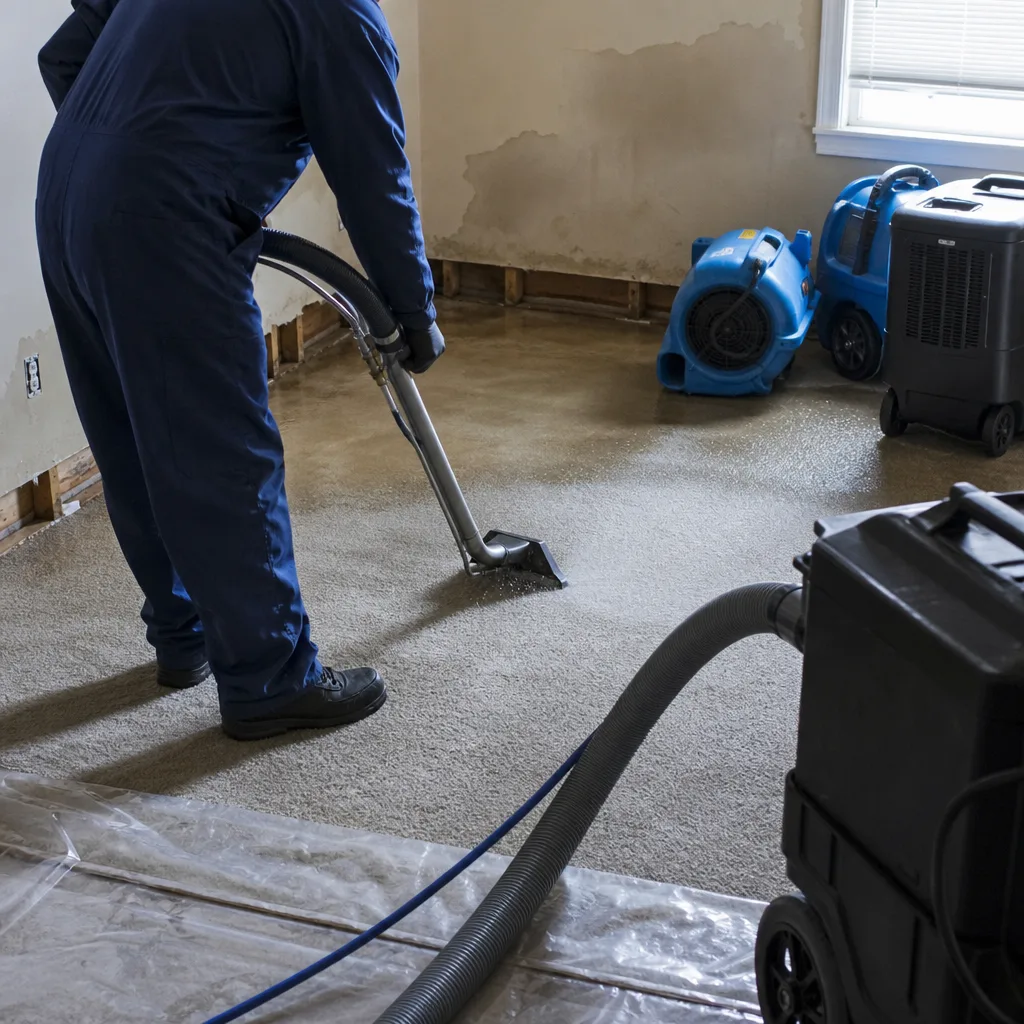
- How to Verify Licenses, Bonds, and Insurance in Washington State
- The Six Questions to Ask Before Signing Anything
- How to Read a Written Estimate Line by Line
- Documentation Red Flags That Cost Renton Homeowners Their Claims
- How to Test Whether a Workmanship Warranty Is Real
- Why a Contractor Who Contacts Your Insurer First Is a Problem
- Renton-Specific Factors: Climate, Codes, and Common Loss Patterns
- Common Mistakes to Avoid
- When to Call a Professional
- Frequently Asked Questions
BeforeAfterHow to Verify Licenses, Bonds, and Insurance in Washington State
Every legitimate damage restoration contractor in Renton must carry a Washington State contractor registration through the Department of Labor & Industries (L&I). This is not optional, and it is not the same as a city business license. Here’s how to check it, and what the numbers on your screen actually mean.
Step 1: Use the L&I Contractor Lookup
Go to the L&I Contractor Lookup tool at lni.wa.gov. Enter the contractor’s name or Unified Business Identifier (UBI) number. The system returns a registration record that includes:
- Contractor registration number: A six-digit number preceded by letters indicating the specialty (e.g., GENERAL for general construction, which covers most restoration work involving structural repair).
- Bond status and amount: Washington requires a $12,000 surety bond for general contractors and $6,000 for specialty contractors. The bond protects you if the contractor abandons the job or fails to pay subcontractors. If the bond shows “inactive” or expired, stop here.
- Insurance on file: The lookup shows whether the contractor has submitted proof of general liability insurance. It does not show coverage limits; you’ll need to request a certificate of insurance directly for that.
- Disciplinary history: Any suspensions, fines, or compliance actions appear in this section. Even one recent violation warrants a conversation.
What the Numbers Mean for Your Claim
A registered contractor can pull permits in Renton and sign off on work that meets King County building code. An unregistered contractor cannot. If your insurer discovers unpermitted work during a claim review, they may deny coverage for that portion of the loss. We’ve seen this happen in Renton’s Benson Hill neighborhood, where a homeowner’s secondary water damage claim was reduced by $14,000 because the initial mitigation contractor lacked proper registration and the drying work required permit-level documentation.
Ask the contractor for their license number before they visit. A technician who arrives without it, or who provides a number that doesn’t match the L&I lookup, is not someone you want documenting your loss.
Verify Insurance Beyond the L&I Screen
The L&I lookup confirms insurance exists. It does not confirm adequate coverage for your job. Request a Certificate of Insurance (COI) naming you as additional insured for the project duration. For water damage restoration involving structural drying and reconstruction, minimum coverage should include:
- General liability: $1,000,000 per occurrence
- Workers’ compensation: active and covering all on-site personnel
- Pollution liability: essential for mold remediation and sewage cleanup, as standard general liability often excludes biological contaminants
We’ve reviewed competitor estimates in Renton where the contractor carried general liability but no pollution coverage. When mold was discovered behind the drywall, the homeowner faced a $3,800 out-of-pocket remediation bill that proper coverage would have addressed.
The Six Questions to Ask Before Signing Anything
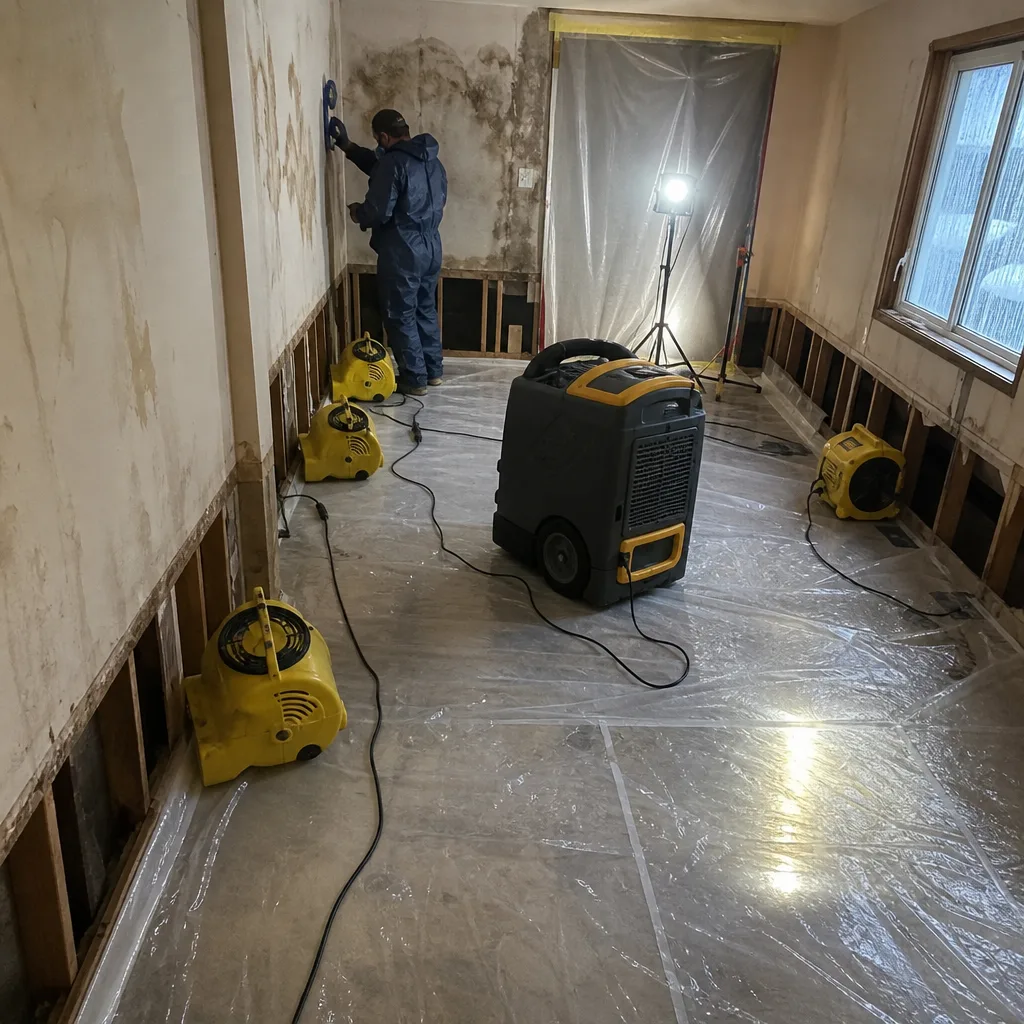
These questions separate documentation-first contractors from reputation-dependent ones. Ask them in this order, and know what acceptable answers sound like.
Question 1: “Can I see a sample drying log from a completed job?”
What you’re testing: Whether the contractor produces daily moisture readings as a standard practice, not a premium service.
Acceptable answer: The contractor emails or shows you a multi-page document with dated entries, room-by-room moisture content readings (in percentage for wood, grains per pound for air), equipment placement maps, and psychrometric data showing vapor pressure differential. The log references IICRC S500 standards and includes technician initials.
Red flag: “We take readings but don’t usually share them with homeowners,” or “Our project manager keeps those.” A drying log is your primary evidence that drying was performed to standard. If the contractor treats it as internal paperwork, they are not working for your claim.
Question 2: “Will I receive a written price before any work begins, and will that price change once the crew is inside?”
What you’re testing: Scope creep protection.
Acceptable answer: “Yes. You’ll receive a written scope with line-item pricing, and any additional findings that change the price require your written approval before work continues.” This is Haven Standard, Clause 1: written price before work begins, no exceptions.
Red flag: “We need to start drying first, then we’ll bill based on time and materials,” or “The estimate might change once we open things up.” Time-and-materials billing without a cap removes your ability to control costs and gives insurers grounds to challenge every line item.
Question 3: “What documentation will I receive at the end of the job?”
What you’re testing: Whether the contractor’s deliverables match what insurers require for claim closure.
Acceptable answer: A specific list: photo record of damage and completed work, daily drying logs, final moisture readings showing equilibrium, written scope-of-work with line-item pricing, and a signed warranty document. The contractor should name the standards referenced (IICRC S500 for water, S520 for mold, S740 for fire).
Red flag: “We’ll give you an invoice,” or “The insurance company gets everything.” You need your own complete file. Insurers misplace documentation. Adjusters change. Your file is your protection.
Question 4: “Who will be on-site, and are they your employees or subcontractors?”
What you’re testing: Accountability chain.
Acceptable answer: Named, background-checked, uniformed technicians who are W-2 employees, with license numbers and training records available. The contractor can tell you who will arrive and when.
Red flag: “We use crews as needed,” or “Our project manager will meet you, then we send whoever’s available.” Subcontractor networks are common in restoration, but the contractor must still document who performed what work and certify their training. Vague answers here predict vague paperwork later.
Question 5: “How do you handle equipment from other jobs?”
What you’re testing: Cross-contamination prevention and equipment traceability.
Acceptable answer: Equipment is cleaned, tagged, and tracked by serial number. Dehumidifiers and air movers from sewage or biohazard jobs are segregated and sanitized to hospital-grade standards before redeployment. The contractor names their equipment manufacturers (Phoenix, Dri-Eaz, XPOWER, B-Air, Injectidry) and can show you maintenance logs.
Red flag: “It’s all professional-grade,” or “Don’t worry, we clean everything.” Specificity matters. In Renton’s higher-humidity zones near the Cedar River, equipment efficiency degrades faster without maintenance. A contractor who can’t name their equipment brands or show maintenance records is not maintaining drying efficiency.
Question 6: “What does your workmanship warranty look like in writing?”
What you’re testing: Whether the warranty is enforceable or performative.
Acceptable answer: The contractor produces a one-page document with specific terms, duration, covered defects, and the process for making a claim. It names the standard it operates under (e.g., “The Haven Standard, 365-Day Done Right Promise”) and includes a signature line for both parties.
Red flag: “We guarantee our work,” or “Just call us if anything comes up.” Verbal warranties are not warranties. They’re conversation.
How to Read a Written Estimate Line by Line
A proper restoration estimate is a technical document, not a price list. Here’s how to read it like an adjuster.
Line Items That Reference Standards
Look for explicit citations: “Extract standing water per IICRC S500, Category 2,” or “Establish drying chamber per IICRC S500, 12.2.” These references mean the contractor’s pricing is tied to documented industry standards, not arbitrary rates. When an adjuster reviews the estimate, they can verify each line item against the standard’s prescribed methods.
Estimates without standard references rely on “custom” or “proprietary” methods. These are harder to defend and easier to deny.
Material Classifications
The estimate should classify affected materials by permeance and sensitivity:
- Class 1 materials (low permeance): Tile, concrete, sealed wood. These dry slowly and may require extended dehumidification.
- Class 2 materials (medium permeance): Plywood, dimensional lumber, carpet cushion. These absorb moisture readily and may need removal.
- Class 3 materials (high permeance): Gypsum board, insulation, unfinished wood. These saturate quickly and often require demolition.
If your estimate lumps all materials as “water damage repair” without classification, the contractor has not performed a proper moisture inspection. This matters in Renton’s older homes near Downtown, where lath-and-plaster walls (Class 3) sit behind newer drywall (Class 3) in retrofitted basements, creating hidden moisture reservoirs that standard drying protocols miss.
Equipment Specifications
The estimate should specify dehumidifier capacity in pints per day at AHAM conditions (80°F, 60% RH), and air mover count by room. “2 dehumidifiers, 4 air movers” is insufficient. “1 Phoenix R200 LGR dehumidifier (135 pints/day AHAM), 4 B-Air VP-50 air movers” is auditable.
Equipment specifications also predict drying time. A low-capacity dehumidifier in a high-moisture load environment extends drying, increases labor costs, and risks secondary damage. We’ve reviewed estimates in Renton’s Fairwood neighborhood where contractors specified residential-grade dehumidifiers for commercial-scale losses, then billed for 14 days of drying that proper equipment would have completed in 5.
Labor Rates and Markup Transparency
Restoration estimates typically include:
- Direct labor: technician hours at stated rate
- Equipment rental: daily or weekly rates with minimums
- Materials: at cost plus markup (typically 20-30%)
- Overhead and profit: 10-20% on trades, higher on specialty work
The estimate should show these separately, not as a single lump sum. Combined pricing hides markup and makes adjuster negotiation harder. If your contractor won’t break out costs, they are not working for transparency.
Documentation Red Flags That Cost Renton Homeowners Their Claims
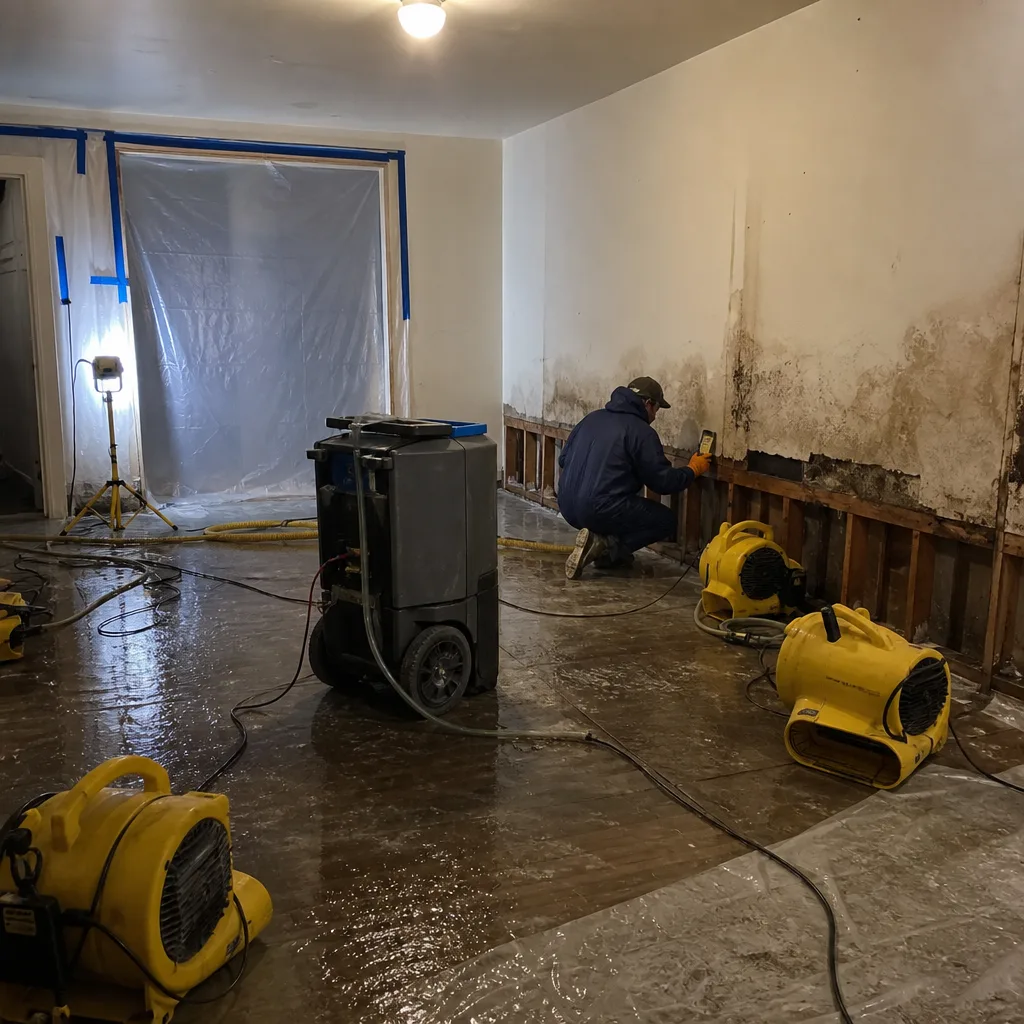
These patterns appear repeatedly in denied or reduced claims. Spot them before you hire.
Red Flag 1: The “Emergency Service” Authorization
A contractor arrives at 2 AM, hands you a one-page authorization with a signature line and a blank cost section, and starts extracting water. By morning, you’re committed to open-ended billing. Never sign a document without a maximum dollar amount or a written scope. In Washington State, emergency service authorizations are binding contracts. The time to negotiate terms is before the equipment starts.
Red Flag 2: Moisture Readings Without Context
A technician waves a moisture meter and announces “You’re at 18%.” This number means nothing without the material type, the reference dry standard, and the measurement depth. Wood flooring at 18% moisture content is elevated but not emergency-level. Gypsum board at 18% measured at surface level may mask 60% saturation at the base plate. Demand the full reading: material, depth, dry standard, and date.
Red Flag 3: Photo Records That Exclude Pre-Existing Conditions
The contractor photographs damage extensively but skips the stained ceiling that existed before the loss, or the cracked tile in the adjacent bathroom. When the insurer reviews the file, they attribute all damage to the current event and later discover discrepancies. This triggers fraud investigations and payment holds. A proper photo record documents pre-existing conditions with date stamps, protecting both you and the contractor.
Red Flag 4: Drying Logs That Skip Days
Psychrometric drying requires daily monitoring. A log that jumps from Day 1 to Day 4 suggests the contractor visited once, set equipment, and returned to collect it. This is called “set and forget” drying, and it violates IICRC S500. In Renton’s spring and fall, when outdoor humidity swings between 40% and 85%, daily monitoring is essential to prevent equipment from adding moisture rather than removing it. For a full breakdown of seasonal risks, see our Seasonal Damage Restoration Care for Renton: Year-Round Homeowner’s Guide.
Red Flag 5: Estimates That Omit Tertiary Drying
Tertiary drying is the final phase where materials reach equilibrium moisture content with the surrounding environment. Contractors who stop at “dry to the touch” leave structural members at elevated moisture levels that support mold growth and material degradation. The estimate should specify target moisture content by material type and confirm tertiary drying with documented readings.
How to Test Whether a Workmanship Warranty Is Real
A warranty is only as good as the process that enforces it. Here’s how to distinguish enforceable guarantees from marketing language.
The Written Document Test
Ask the contractor to email you their warranty template before you commit. A real warranty includes:
- Specific duration (365 days, not “one year” - calendar years vary)
- Specific covered defects (water damage recurrence at treated areas, mold regrowth in remediated spaces, structural failure of repairs)
- Specific exclusions (new unrelated water events, homeowner modifications, third-party damage)
- Claim process (who to contact, response time, remedy options - repair, re-do, or refund)
- Governing standard (The Haven Standard, manufacturer warranty, or trade association guarantee)
If any element is missing, the warranty is not a contract. It’s a sentiment.
The Response Time Test
Ask: “If I call on day 200 with a moisture reading that matches pre-drying levels, when will someone be on-site?” Acceptable answer: a specific timeframe, typically 24-48 hours for non-emergency warranty claims. Red flag: “We’ll get someone out as soon as we can,” or “Call our main line and they’ll put you in the queue.”
The Prior Claim Test
Ask: “Can you describe a warranty claim you’ve handled in the past year?” Acceptable answer: a specific scenario with outcome, even if anonymized. “We had a recurrence in a Renton Highlands crawl space where the vapor barrier failed at a seam. We re-dried the space, replaced the barrier, and extended the warranty 365 days from completion.” Red flag: “We don’t really get warranty calls,” or “Our work is good enough that we don’t need to worry about that.”
At DryMark Restoration Renton, our 365-Day Done Right Promise under The Haven Standard is a signed document, not a verbal assurance. If it’s not done right, we make it right. The guarantee has an address.
Why a Contractor Who Contacts Your Insurer Before You Approve Their Scope Is a Problem
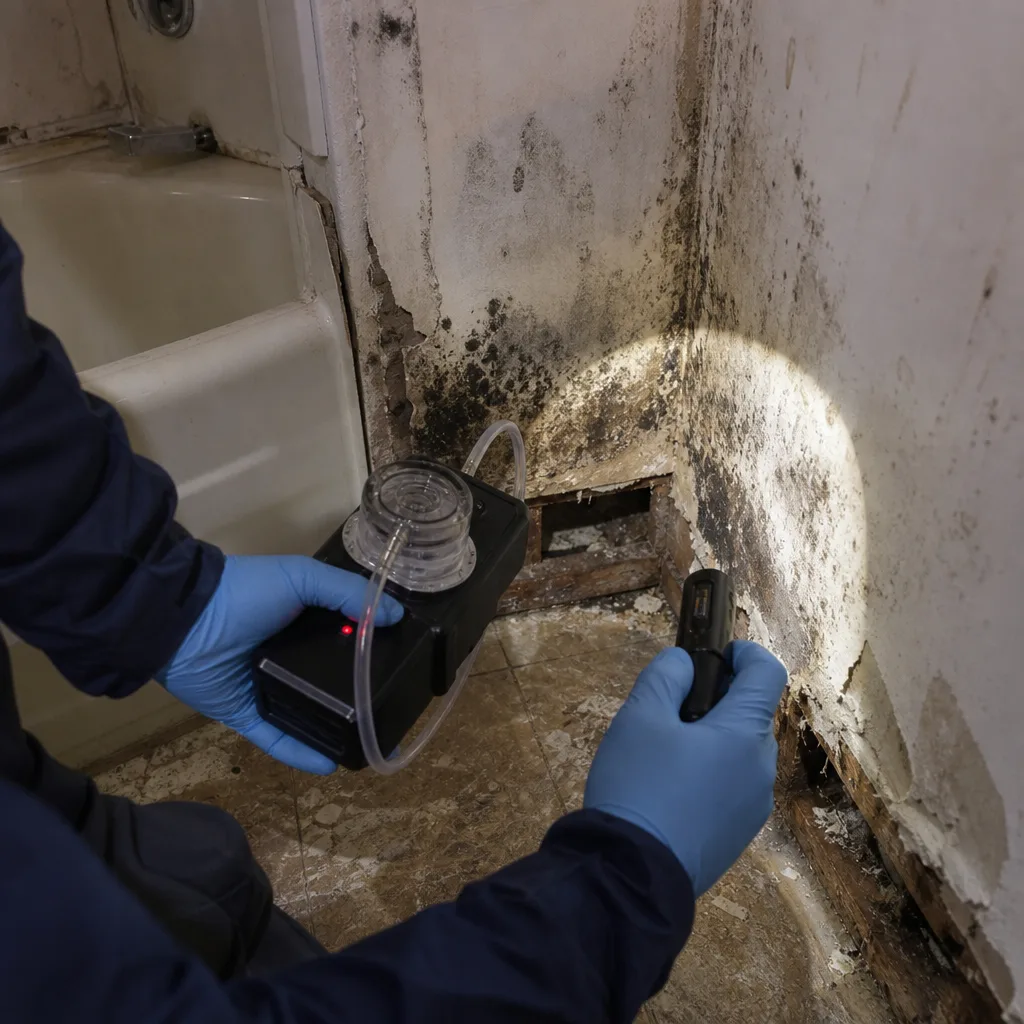
This is the most misunderstood red flag in restoration hiring. Many contractors advertise “we work directly with your insurance company” as a convenience. In practice, it often creates conflicts that reduce your coverage.
The Assignment of Benefits Trap
Some contractors present an Assignment of Benefits (AOB) form, which transfers your insurance claim rights to them. Once signed, the contractor controls the claim, negotiates with the adjuster, and collects payment directly. You lose visibility into the scope, the pricing, and the settlement. AOB abuse has prompted legislative restrictions in multiple states; Washington has not prohibited it, but the practice remains high-risk for consumers.
The Pre-Approval Problem
A contractor who contacts your insurer before you’ve approved their scope is effectively negotiating on your behalf without your authorization. They may agree to a scope that omits work you need, or accept a price that doesn’t cover full restoration. We’ve reviewed cases in Renton’s Talbot Hill neighborhood where a contractor’s “direct insurance billing” resulted in a scope that dried but did not repair, leaving the homeowner with $8,000 in uncovered reconstruction costs.
The Proper Sequence
- You approve the contractor’s written scope and price.
- You authorize the contractor to share that scope with your insurer.
- You remain copied on all communications.
- You approve any scope changes before they are submitted to insurance.
This sequence preserves your control. A contractor who resists it is not working for you; they are working for the easiest path to payment.
Renton-Specific Factors: Climate, Codes, and Common Loss Patterns
Renton’s geography and housing stock create restoration challenges that generic advice misses.
Climate and Moisture Dynamics
Renton receives 38-42 inches of annual precipitation, concentrated October through April. The Cedar River watershed and proximity to Lake Washington create persistent high-humidity conditions, especially in neighborhoods below 400 feet elevation: Downtown Renton, Renton Highlands near the river, and the Kennydale area along the lake shore. Homes in these zones dry more slowly and require more aggressive dehumidification than the same structure would in drier eastern King County.
Spring snowmelt on the Cascade foothills can raise the Cedar River level rapidly, affecting basements and crawl spaces in the Highlands and Benson Hill areas with little warning. Contractors working in Renton should understand these hydrological patterns and adjust drying protocols accordingly.
Housing Stock and Construction Era
Renton’s housing spans multiple eras with distinct vulnerabilities:
- Pre-1960s (Downtown, Renton Hill): Balloon framing, minimal insulation, lath-and-plaster, outdated electrical. Water travels vertically through wall cavities unobstructed. Restoration requires extensive opening and longer drying times.
- 1960s-1980s (Fairwood, Talbot Hill): Slab-on-grade construction with embedded radiant heating pipes, single-pane windows, and early aluminum wiring. Slab leaks are common; radiant system damage requires specialized drying to prevent pipe corrosion.
- 1990s-2010s (Issaquah Highlands fringe, new construction): Better insulation but complex HVAC systems, engineered lumber (more moisture-sensitive than solid wood), and tighter building envelopes that trap moisture.
- 2015-present (The Landing, waterfront redevelopment): High-efficiency construction with vapor barriers and mechanical ventilation. Drying requires careful balance to avoid over-drying and material damage.
A contractor who treats all Renton homes as equivalent will miss era-specific risks. Ask whether they’ve worked on your construction type.
Permit and Code Considerations
King County requires permits for structural repairs, electrical work, and plumbing modifications exceeding minor repairs. The City of Renton administers its own permits for work within city limits; unincorporated King County areas use county permitting. A contractor who performs permit-required work without permits creates liability for you and potential claim complications. Verify permit status for any reconstruction component of your scope.
Common Loss Patterns We’ve Documented
In our work across Renton since 2011, we’ve documented recurring loss patterns:
- Slab foundation seepage in Fairwood: Seasonal groundwater rise pushes through slab cracks, often misdiagnosed as plumbing leaks. Proper diagnosis requires moisture mapping and chloride testing, not assumption.
- Crawl space condensation in Renton Highlands: Cool crawl spaces meet warm, humid summer air. Vapor barriers installed without sealed vents and dehumidification fail within two seasons.
- Ice dam backup in Kennydale: Lake-effect snow combined with inadequate attic ventilation creates ice dams that damage multiple roof planes. Interior damage often extends far beyond the visible ceiling stain.
Common Mistakes to Avoid
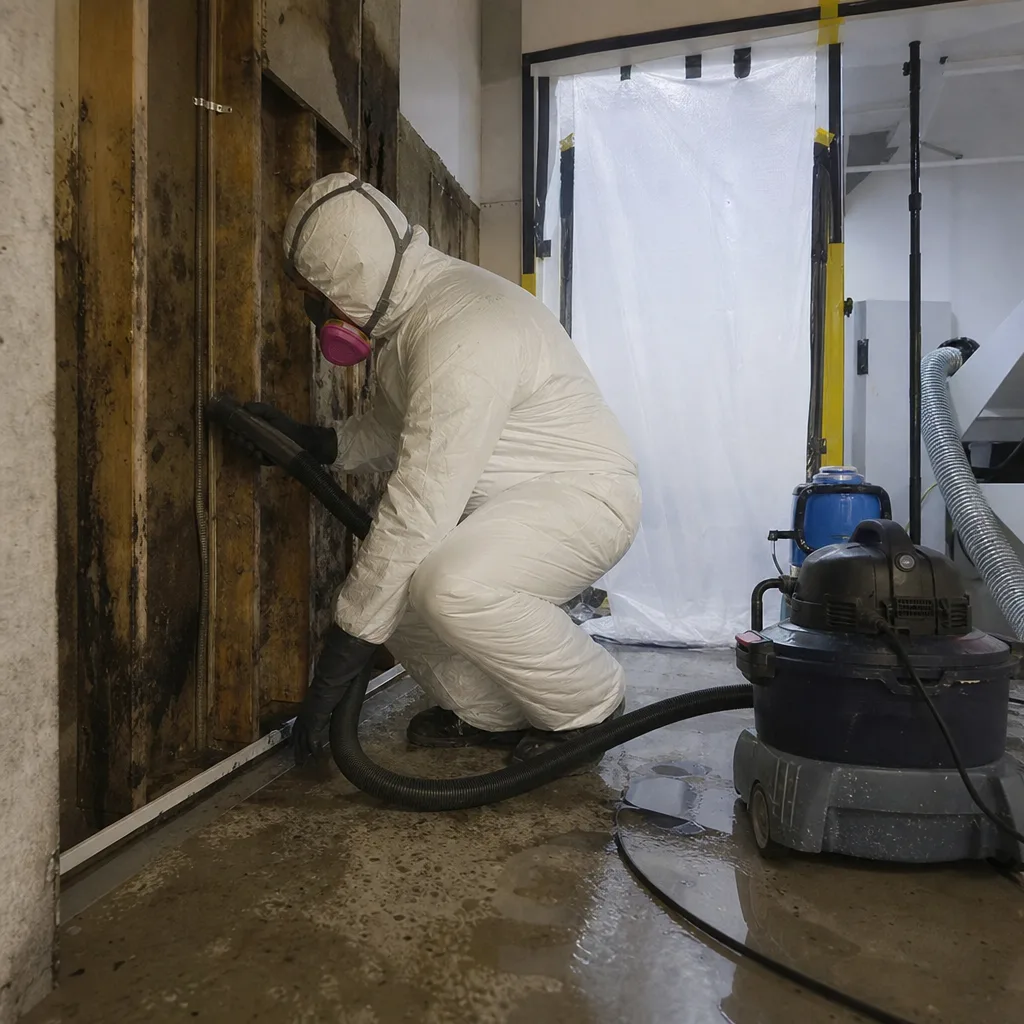
- Hiring for speed alone. A contractor who promises immediate start without inspection is skipping documentation. In Renton’s competitive restoration market, same-day demo is possible, but same-day scope is not. The inspection takes time; the documentation protects you.
- Accepting verbal estimates. Washington State does not require written estimates for emergency services, which creates a loophole exploited by less scrupulous operators. Insist on written pricing before work begins, every time.
- Ignoring the subcontractor chain. If your restoration contractor subcontracts reconstruction, verify that subcontractor’s license and insurance independently. The primary contractor’s coverage does not extend to uninsured subs.
- Assuming insurance covers everything. Policy limits, deductibles, and exclusions apply. A contractor who promises “insurance will take care of it” without reviewing your policy is making commitments they cannot keep.
- Neglecting to document pre-existing conditions. Photograph everything before the contractor arrives. Your phone’s date-stamped photos are admissible evidence if disputes arise.
- Signing without reading. Restoration contracts often contain binding arbitration clauses, lien rights, and AOB language in fine print. Read every page. Ask questions. A legitimate contractor will explain every clause.
- Choosing the lowest bid without comparing scopes. A lower price with fewer line items often means omitted steps: no tertiary drying, no vapor barrier replacement, no air quality testing. Compare line item by line item, not bottom line to bottom line.
When to Call a Professional
Some situations require immediate professional intervention regardless of your DIY capabilities. Call a damage restoration contractor if:
- Water has contacted electrical panels, outlets, or wiring
- Sewage or gray water is present (Category 2 or 3 water damage)
- Mold growth covers more than 10 square feet or is present in HVAC systems
- Fire damage has compromised structural elements or involved synthetic materials
- Odor persists after 48 hours of ventilation and surface cleaning
- You need documentation for an insurance claim of any size
For water damage, mold remediation, fire restoration, or any loss requiring documented evidence, DryMark Restoration Renton offers free estimates in Renton. Our live dispatch answers 24 hours a day, 7 days a week at (360) 469-6341. Every estimate includes a written scope with line-item pricing before any work begins, and every job carries our 365-Day Done Right Promise under The Haven Standard.
Frequently Asked Questions
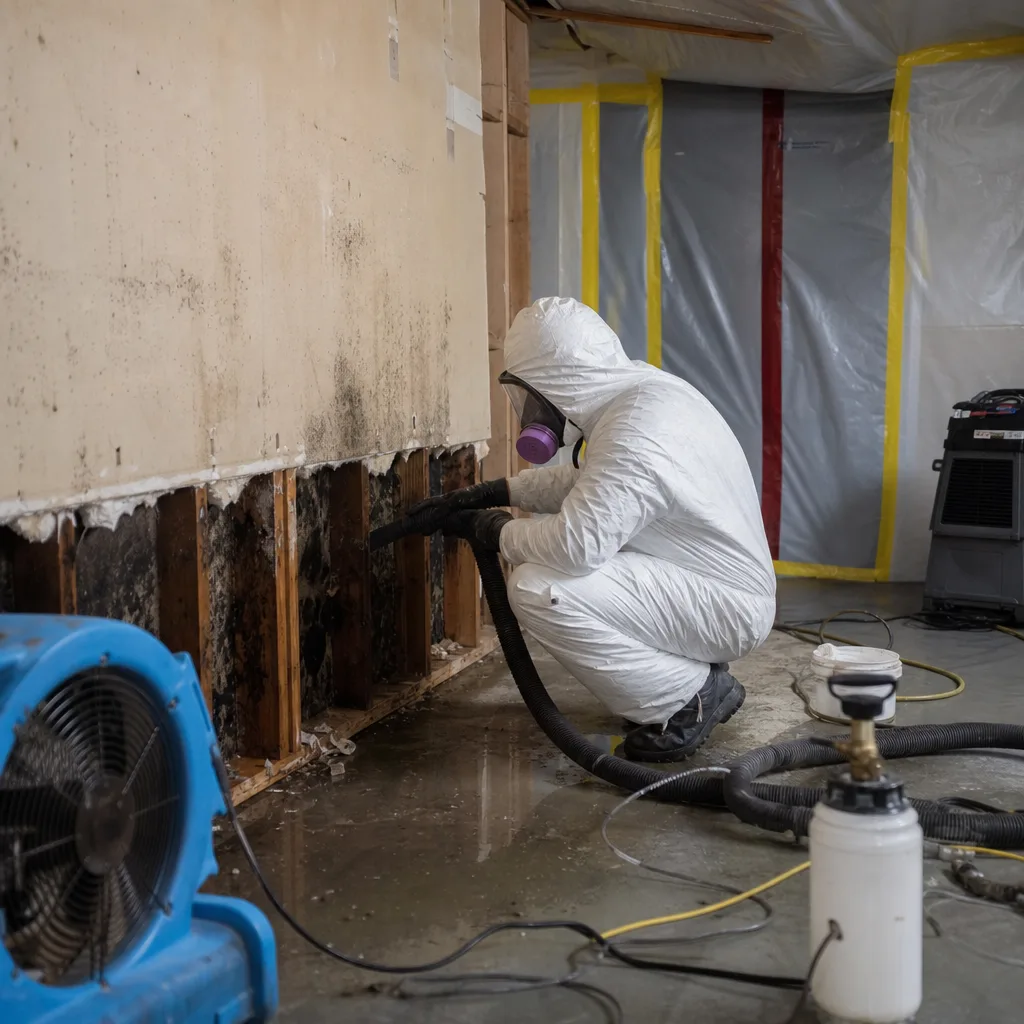
Water damage mitigation in Renton typically ranges from $1,200 for a contained basement extraction to $8,500+ for whole-house drying with reconstruction. Mold remediation averages $15-30 per square foot of affected area, with crawl space jobs in the $3,500-$7,500 range. Fire and smoke restoration starts around $4,000 for light soot cleaning and extends to $25,000+ for structural repair with odor encapsulation. These are market ranges based on our 12,000+ jobs since 2011; your specific loss requires inspection and written scope for accurate pricing. Call (360) 469-6341 for a free estimate with line-item detail.
Coverage depends on your policy type, cause of loss, and documentation quality. Standard HO-3 policies cover sudden and accidental water damage but exclude gradual leaks and flood. Mold coverage is often capped at $10,000 unless specifically endorsed. The quality of your contractor’s documentation - moisture logs, photo records, standard-referenced scope - directly affects whether your insurer accepts the full claim or reduces it. We provide the documentation package that supports maximum allowable recovery, and we offer free second opinions on any competitor’s written estimate.
For emergency water damage, our water damage restoration team in Renton dispatches within 60 minutes of your call during normal coverage hours, with live phone answering 24/7. Response times vary by contractor; verify whether “24/7 service” means live dispatch or voicemail callback. For non-emergency mold remediation or reconstruction, scheduling typically ranges from 2-5 business days for inspection, with work beginning after written scope approval. Reconstruction timelines depend on permit requirements and material availability.
For growth under 10 square feet on hard, non-porous surfaces, DIY cleaning with detergent and water may suffice. For porous materials (drywall, insulation, carpet), HVAC contamination, or growth exceeding 10 square feet, professional mold remediation in Renton is necessary to prevent spore dispersal and ensure complete removal. We provide containment, negative air pressure, HEPA filtration, and post-remediation verification testing that DIY methods cannot achieve. Our documented process also satisfies insurer requirements for coverage of related damage.
You retain control. The contractor provides technical documentation; you authorize what is submitted. We prepare the moisture logs, photo records, and scope-of-work that adjusters need, but we do not negotiate your settlement or accept payment directly from your insurer without your written approval. This preserves your rights and prevents scope compromises made without your knowledge.
Mitigation is emergency stabilization: water extraction, drying, mold containment, soot removal. It requires speed, specialized equipment, and daily documentation. Reconstruction is the rebuild: drywall, flooring, painting, structural repair. It requires permitting, scheduling, and trade coordination. Some contractors do both; many subcontract reconstruction. Verify your contractor’s capabilities for each phase, and understand that reconstruction pricing is scoped and scheduled, not dispatched for same-day start. Fire damage restoration in Renton often spans both phases over 4-12 weeks.
The Bottom Line
The contractor you hire in Renton should be evaluated on evidence, not reputation. Verify their license through L&I. Demand a written scope with line-item pricing before work begins. Ask to see a sample drying log. Read their warranty document, not their warranty language. Insist on controlling your insurance communication. These practices separate documentation-first professionals from competitors who trade on reviews and urgency. In a market where claim outcomes depend on paperwork quality, the contractor who measures moisture content daily and photo-records every visit will outperform the one with better marketing, every time.
Written by Alicia Brennan, Owner at DryMark Restoration Renton, serving Renton since 2011.