
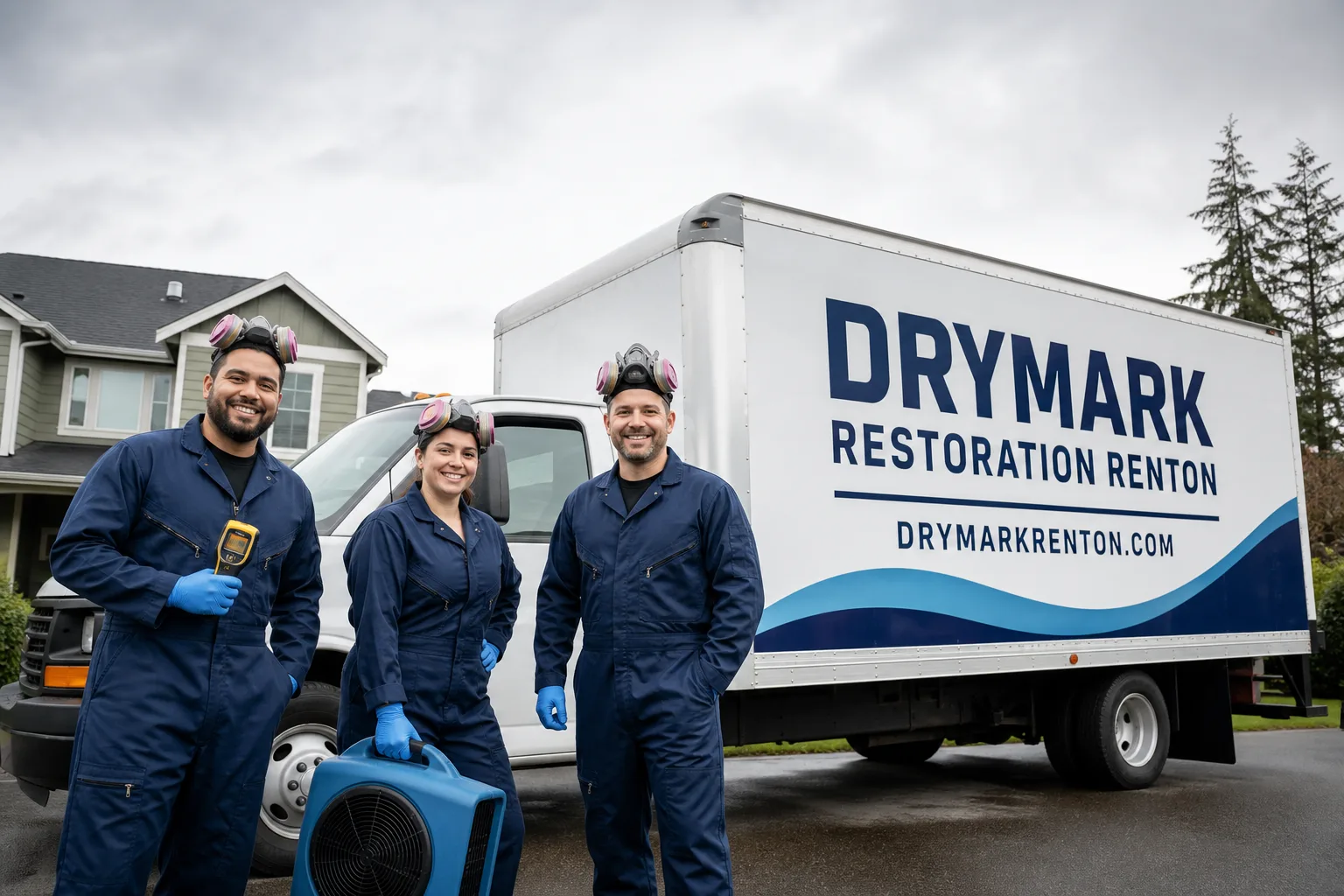
Free visual inspection and a written scope of work before any mitigation begins - photos, moisture readings, and drying logs go in your claim file
The scope we write is the scope we bill. Anything new gets shown to you, in writing, before we touch it.
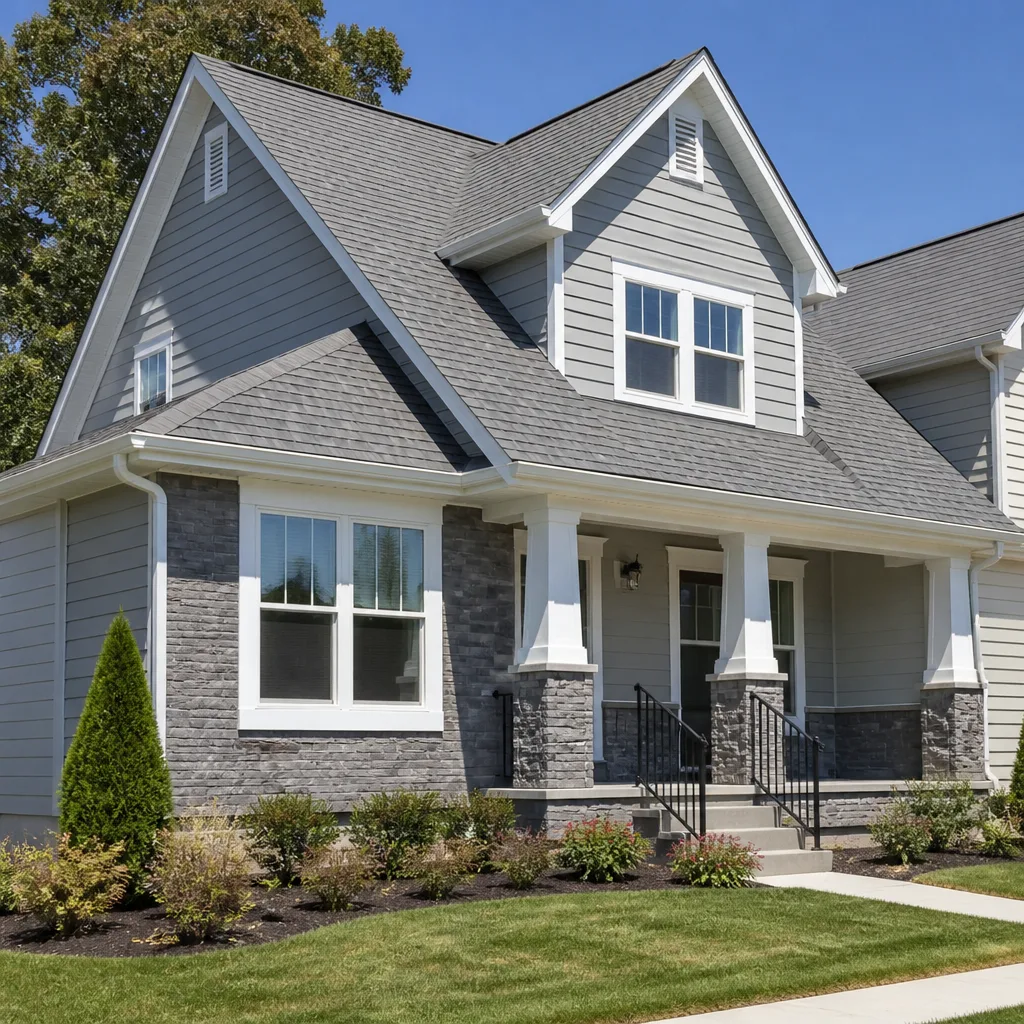
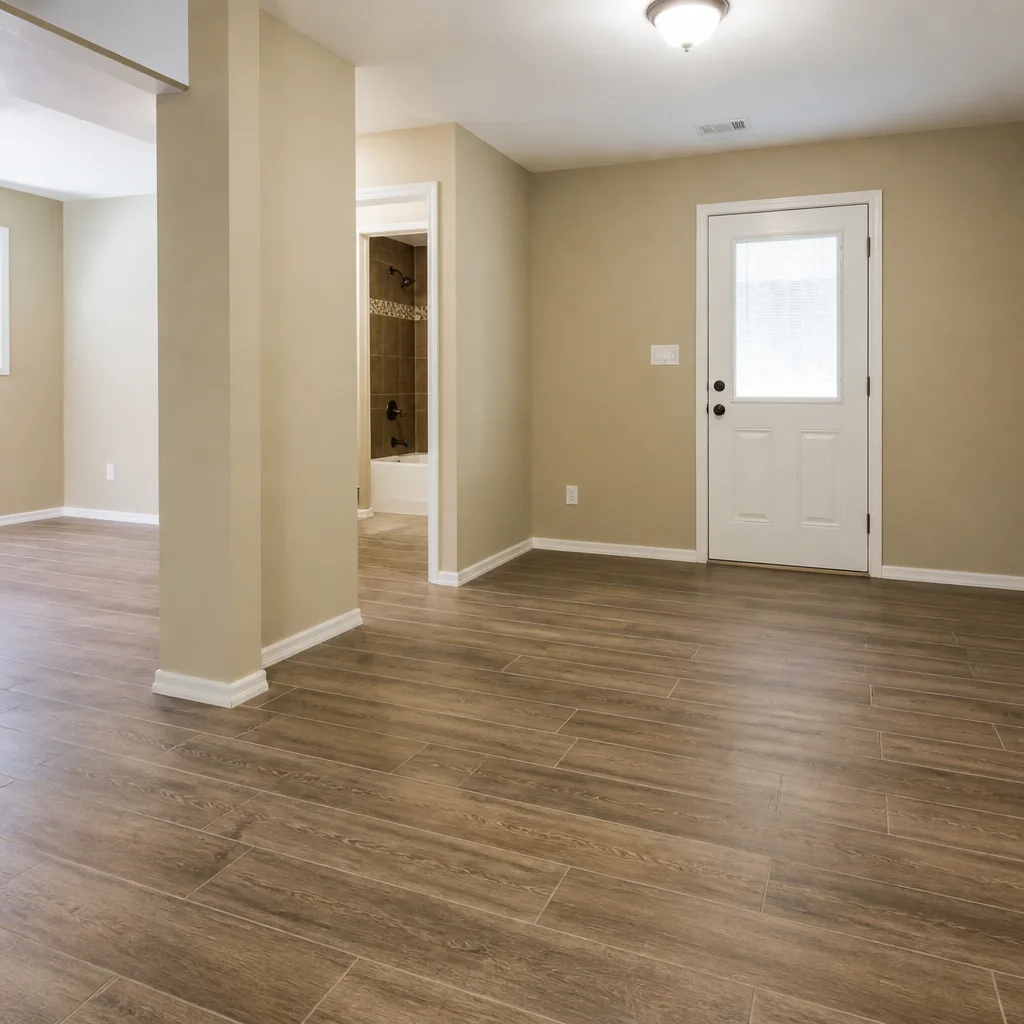
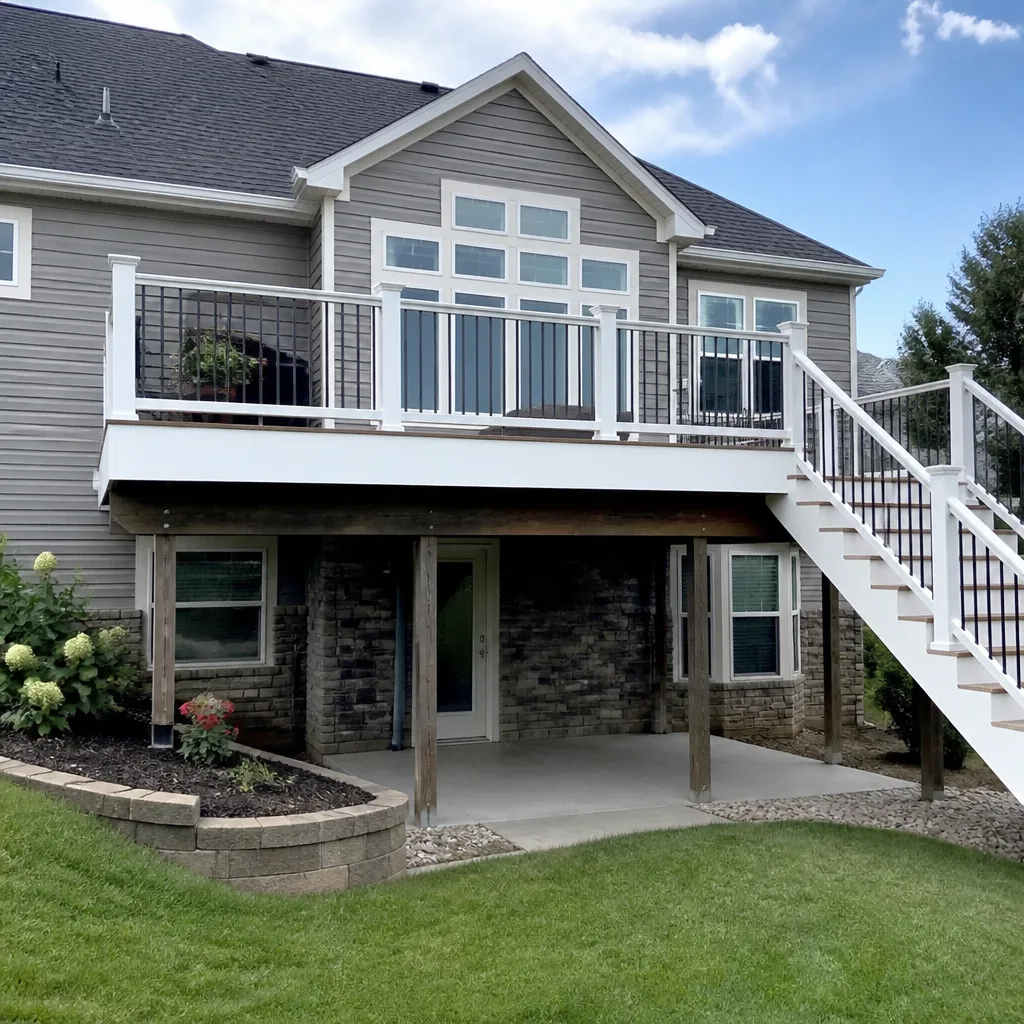
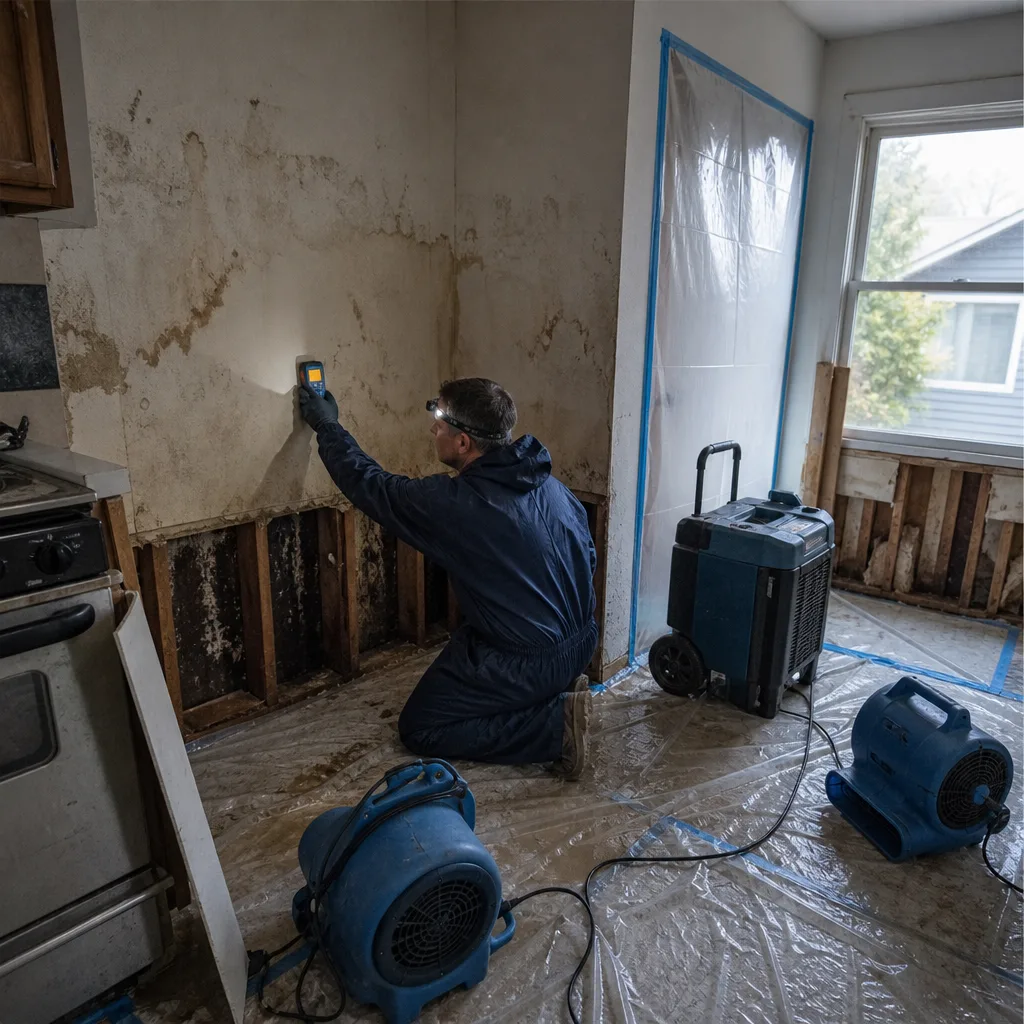 Before
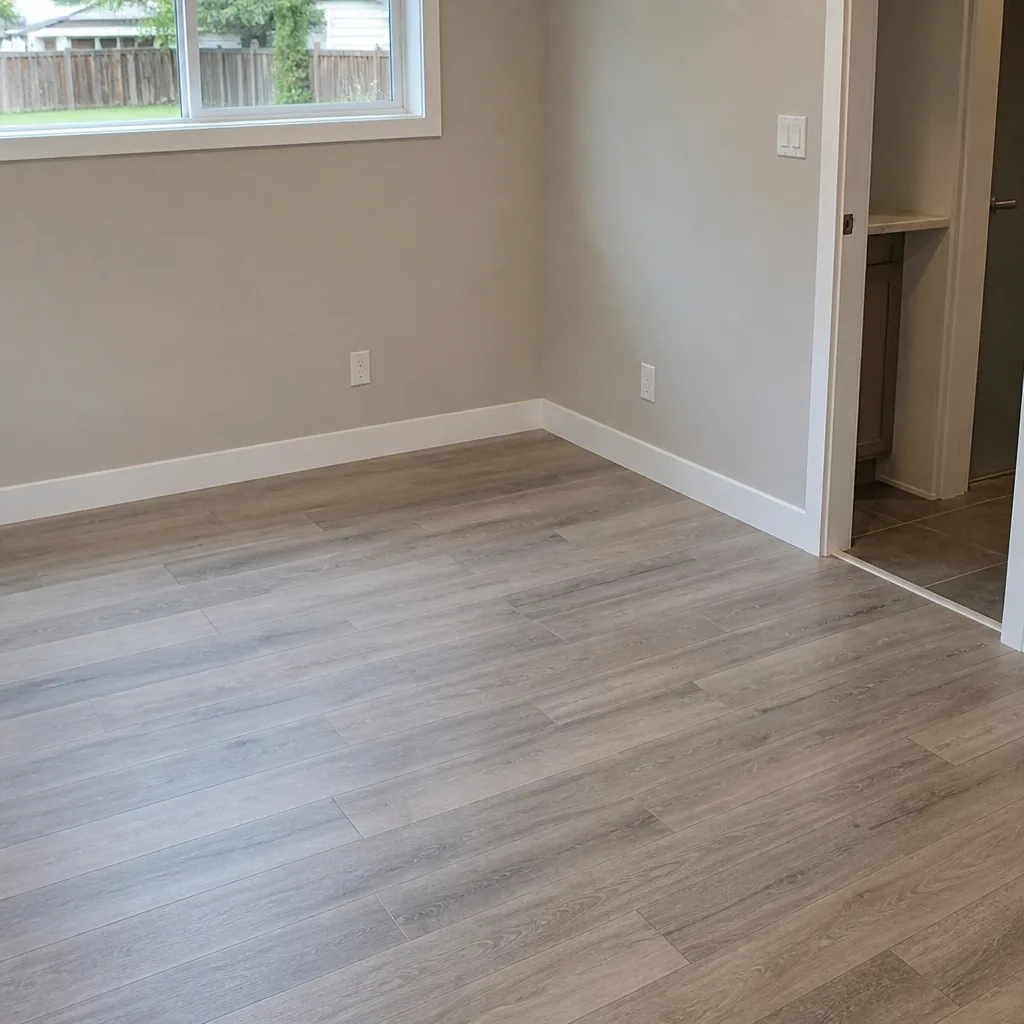 After
After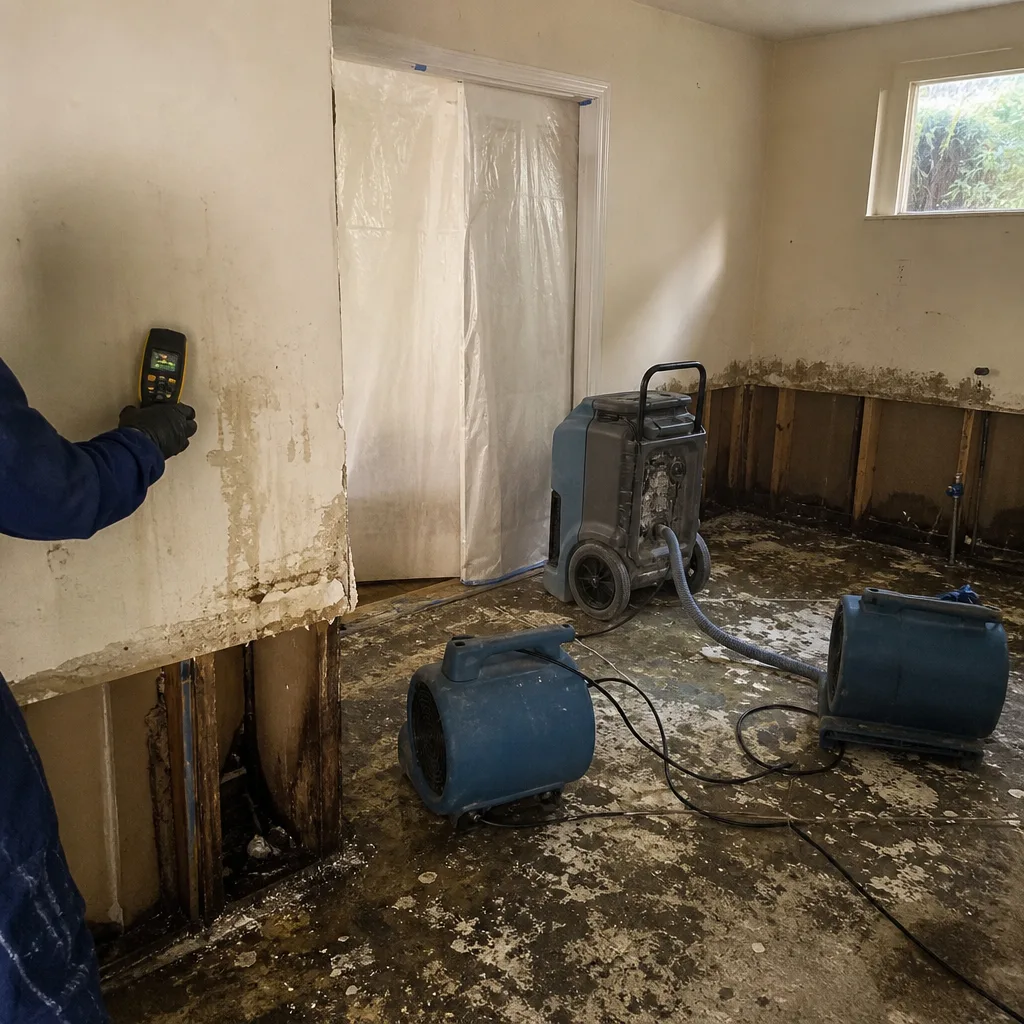 Before
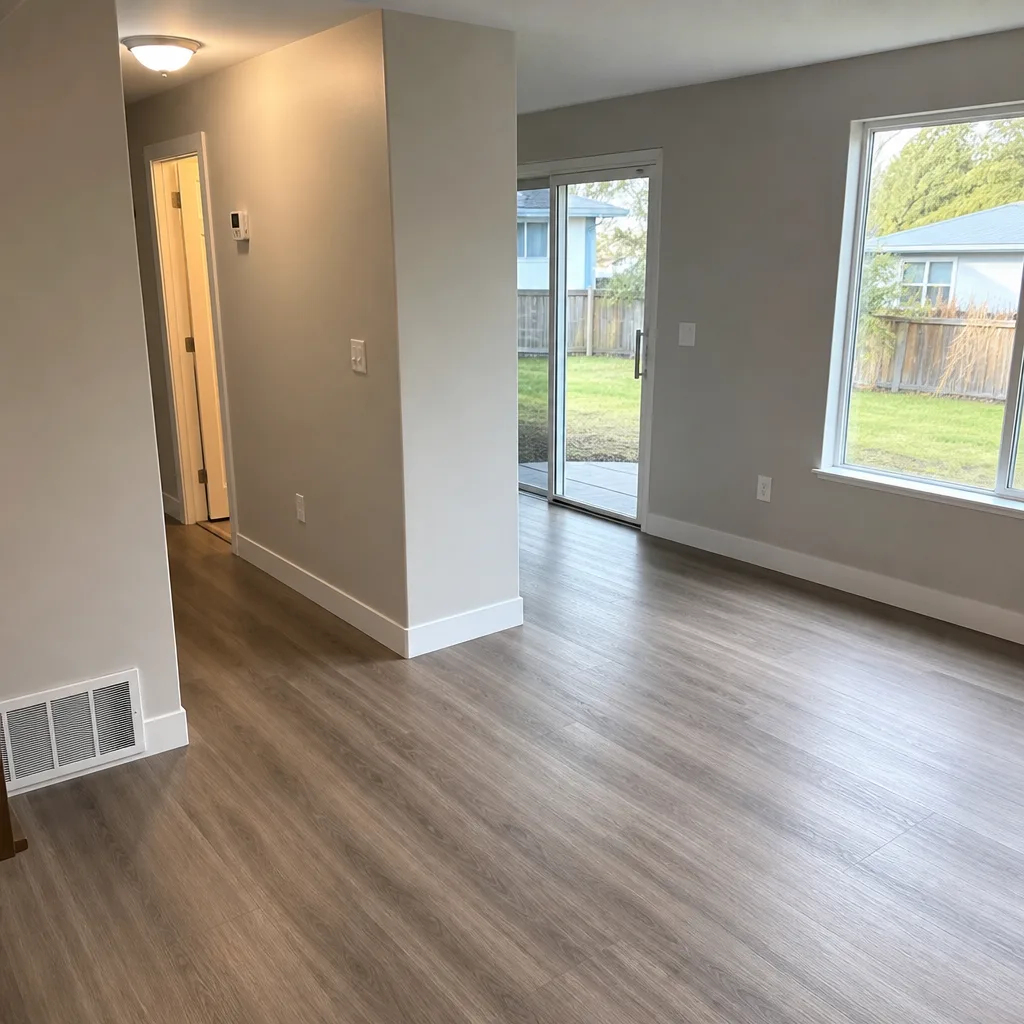 After
After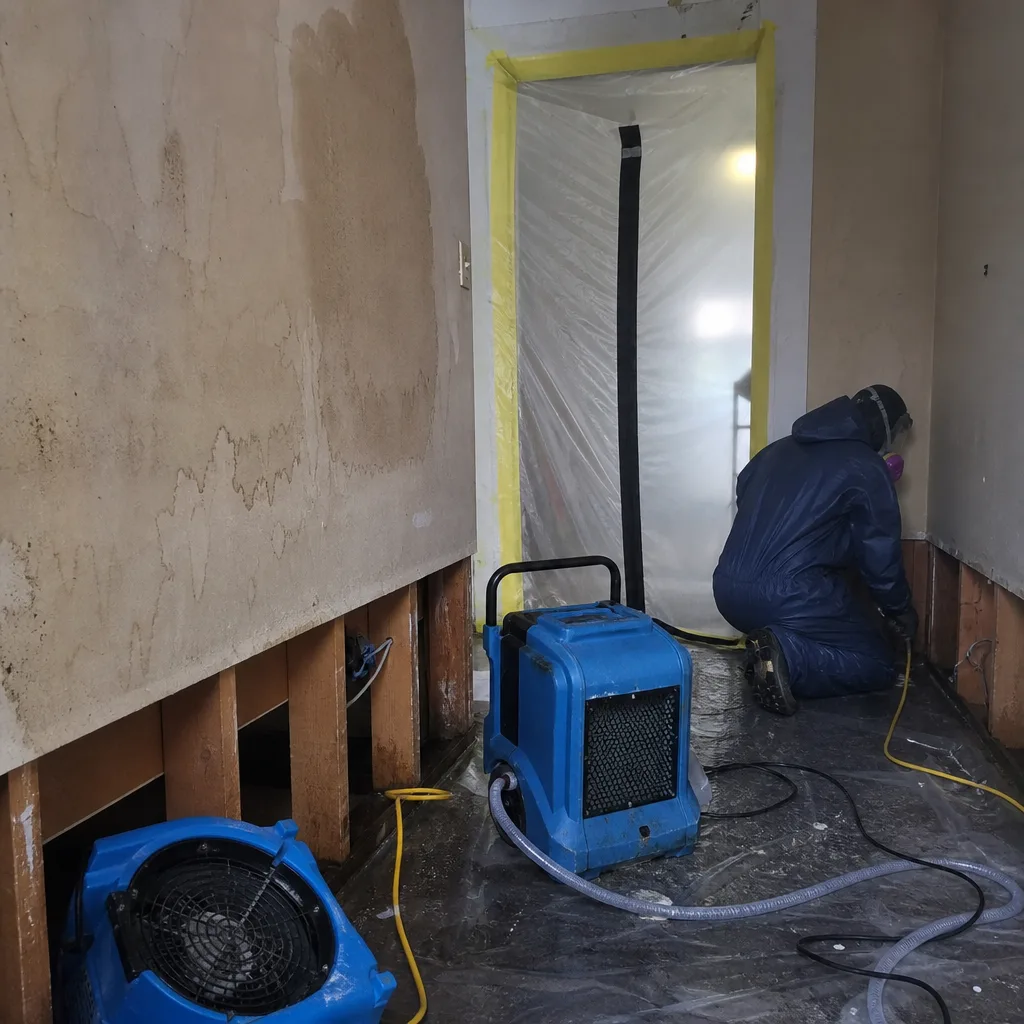 Before
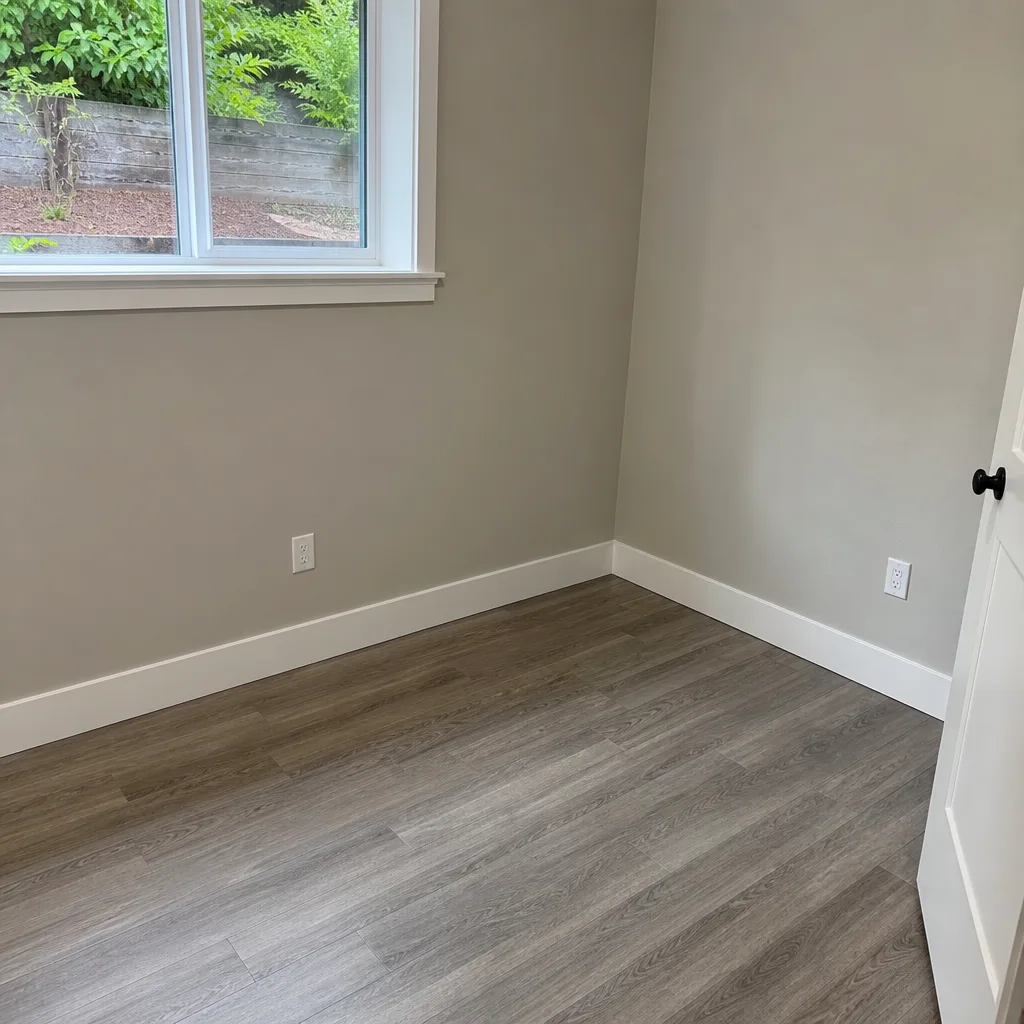 After
AfterFast, Reliable Water Damage Restoration Across Des Moines
Water damage restoration in Des Moines typically runs $2,800-$6,500 for a standard crawl-space or basement extraction and drying job, with emergency response available 24 hours a day, 7 days a week. Most Des Moines homes we see are 1950s-1970s ranch and split-level builds on the bluff plateau, where marine moisture and slope instability create damage patterns inland crews often miss. Our Water Damage Restoration team dispatches from our Seattle office and serves Des Moines directly - no subcontracted referral networks, no voicemail trees on emergency lines. Call (360) 469-6341 and a live person answers, day or night.
Why DryMark Restoration Renton Is Des Moines’s Preferred Water Damage Restoration Company
We’ve restored water damage in Des Moines since 2011, and our file on this city is thick with the specific failure modes of marine-bluff construction. The 12,000+ homes we’ve documented nationwide taught us that Des Moines’s combination of unlined crawl spaces, slope-driven foundation movement, and persistent Puget Sound humidity produces losses that look like simple flooding but carry structural risk underneath.
Our crews know the difference between a one-time storm backup and the chronic moisture loading that saturates a 1960s split-level’s rim joist three months a year. That local knowledge shows up in our written scopes: we check for footing cracks on Marine View Drive jobs, we specify vapor-barrier installation on 1950s ranches where the original builder left bare soil, and we document pre-loss condition with photos before any equipment runs.
Every job is covered by our 365-Day Done Right Promise under The Haven Standard. Haven Standard, Clause 1: a written price before any work starts, every time, with no exceptions. We also offer a Free Second Opinion on any competitor’s written estimate - bring us their scope and we’ll review it at no charge.
Our Water Damage Restoration Services in Des Moines
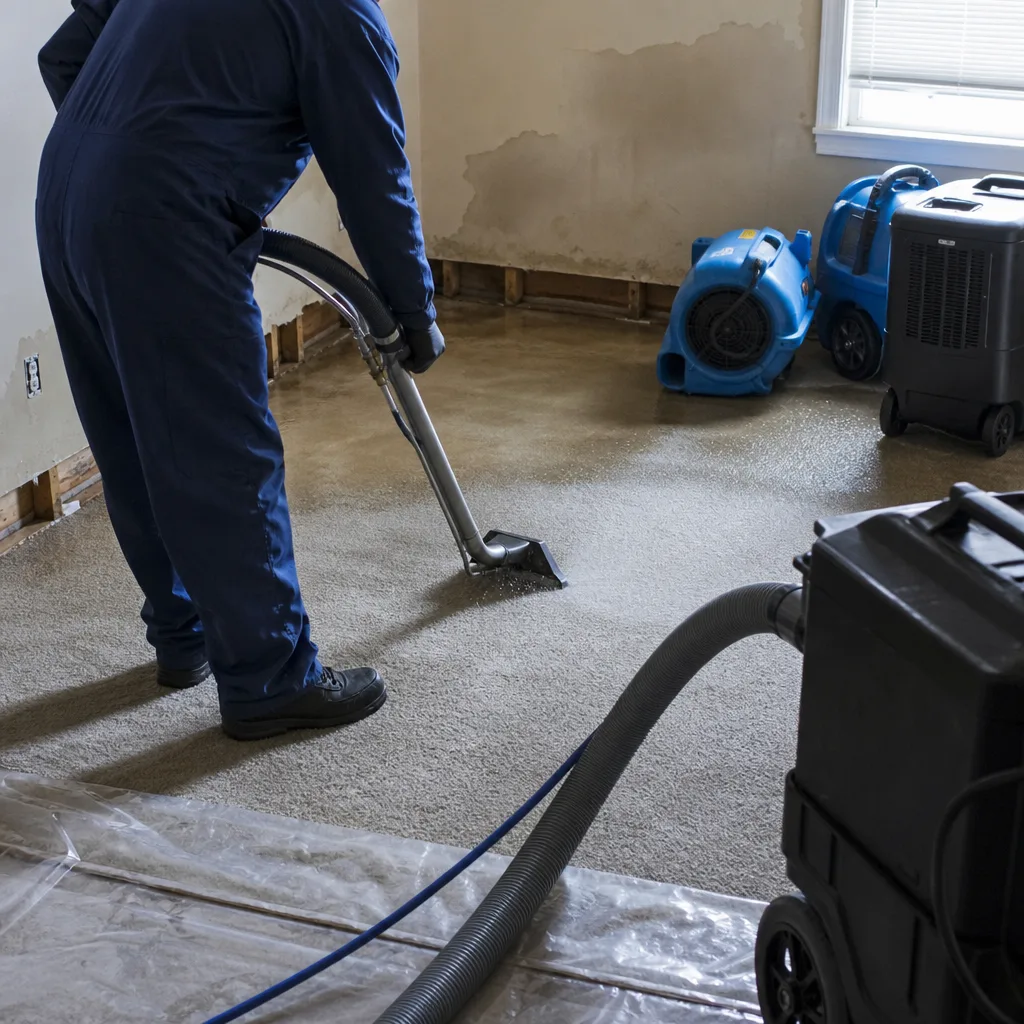
Emergency Water Extraction
Standing water in a Des Moines crawl space or basement moves fast into subflooring and wall cavities. We deploy Phoenix and Dri-Eaz extraction units sized to the loss - from portable units for tight 1950s ranch crawl spaces to truck-mounted systems for flooded basements along the steep ravines draining toward Puget Sound. Our response time to Des Moines is typically under 90 minutes for emergency calls, and we extract before we quote: the water stops causing damage while we document, then we deliver a written price before any drying equipment is placed.
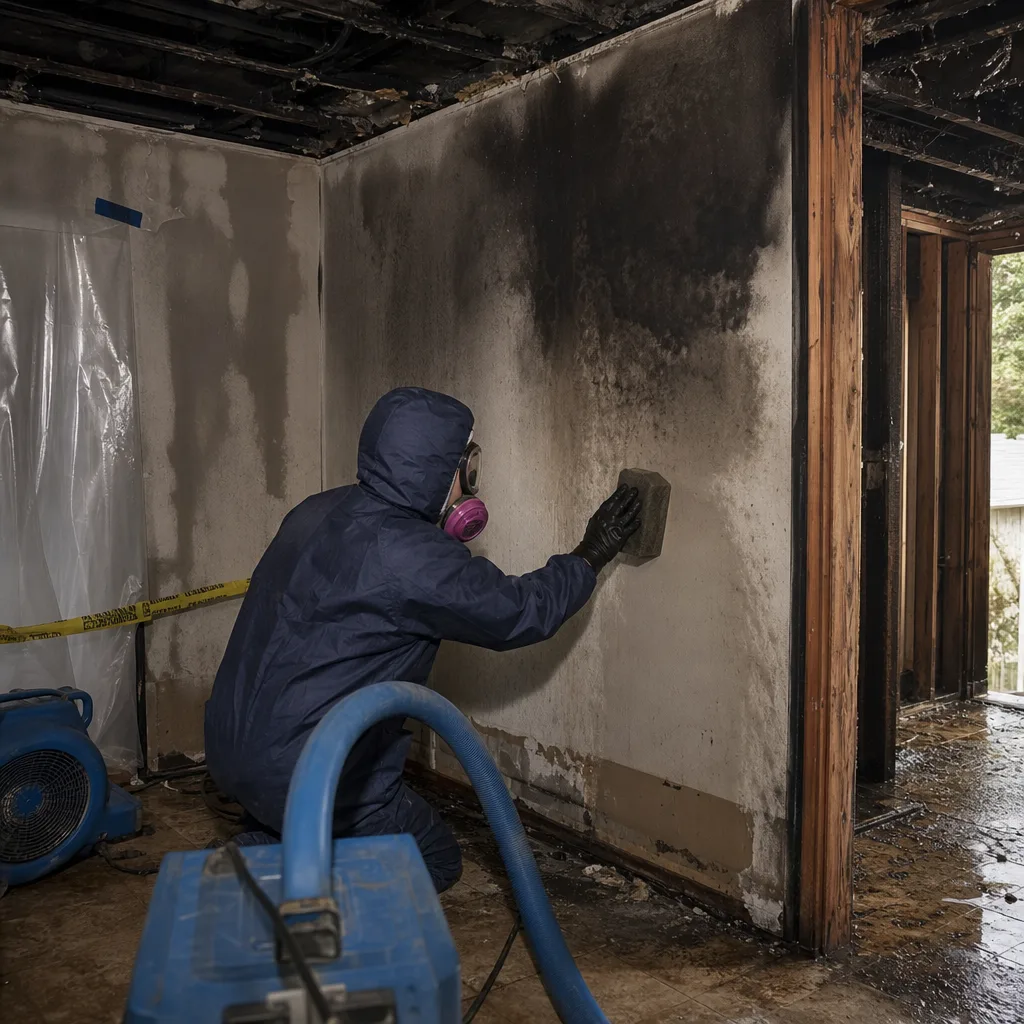
Structural Drying & Dehumidification
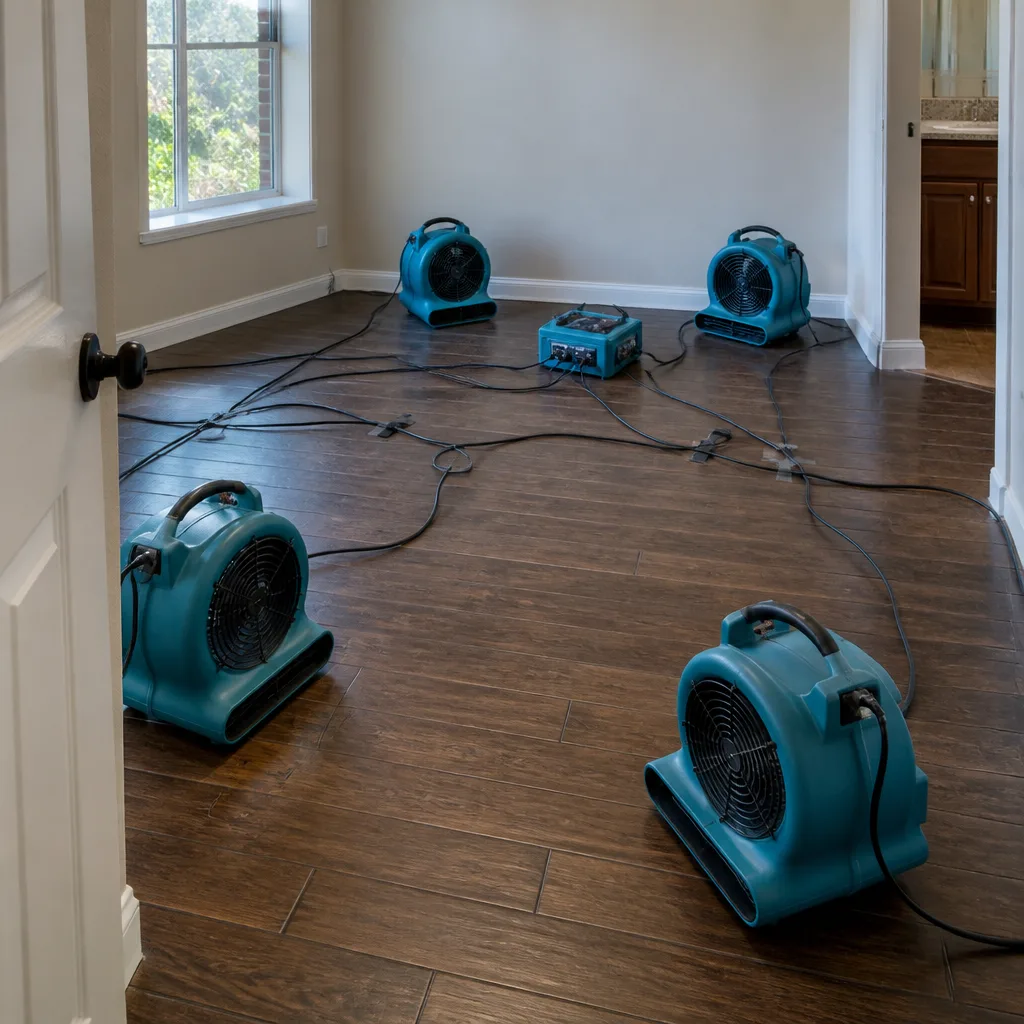
Des Moines’s marine climate means ambient humidity often sits above 70% even on “dry” days, which slows natural evaporation and extends drying timelines for unlined crawl spaces. We calculate psychrometric data - temperature, relative humidity, and vapor pressure differential - to set equipment loads precisely. Our crews use Injectidry cavity-drying systems to push dry air through wall voids and B-Air axial fans to establish airflow patterns in split-levels where the original HVAC design created dead zones. Daily moisture logs track every reading, producing the documentation that turns restoration invoices into payable insurance claims.
Basement Water Removal
Basements in Des Moines’s bluff-edge neighborhoods face a dual threat: groundwater rising through poorly drained soils during atmospheric river events, and storm drain backups along the steep grades that channel runoff from the plateau toward Marine View Drive. We’ve pulled water from finished basements in the Redondo and Woodmont areas where the sump pump failed during a multi-week drizzle stretch, and from utility basements where the original 1960s foundation drain simply collapsed. In each case, we map moisture with Dri-Eaz meters, remove saturated materials by category, and deliver a written drying plan before equipment placement.
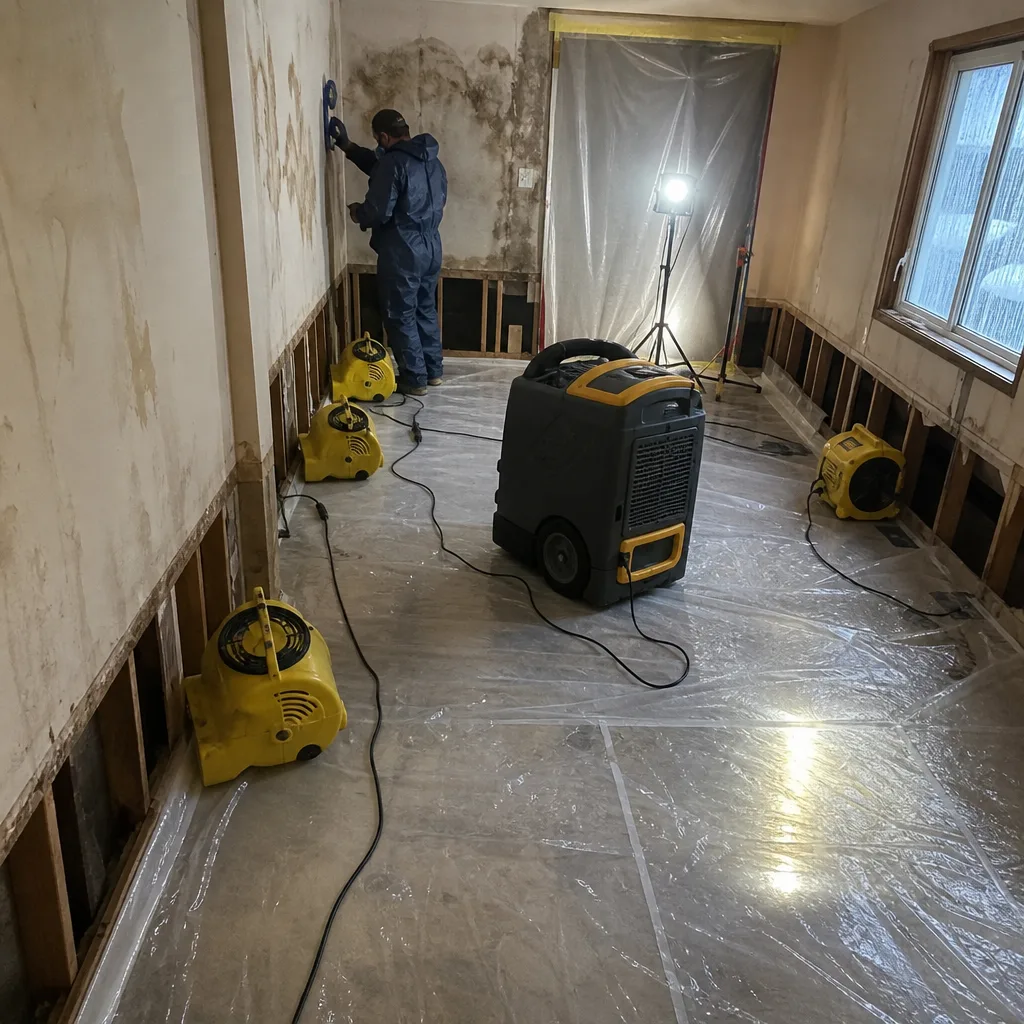
Flood Cleanup
Flood damage in Des Moines isn’t always the dramatic Puget Sound surge homeowners picture. More often, it’s the slow accumulation: a plugged catch basin on a hillside street, a failed downspout on a 1970s split-level, a crawl space that takes on inch-deep water every winter and never fully dries before spring. We categorize flood water by contamination level - clean (Category 1), gray (Category 2), or black (Category 3) - and our scope reflects the actual materials affected, not a generic room rate. Photo documentation on every visit tracks what was removed, what was dried in place, and what moisture readings confirm as restored.
Burst Pipe Restoration
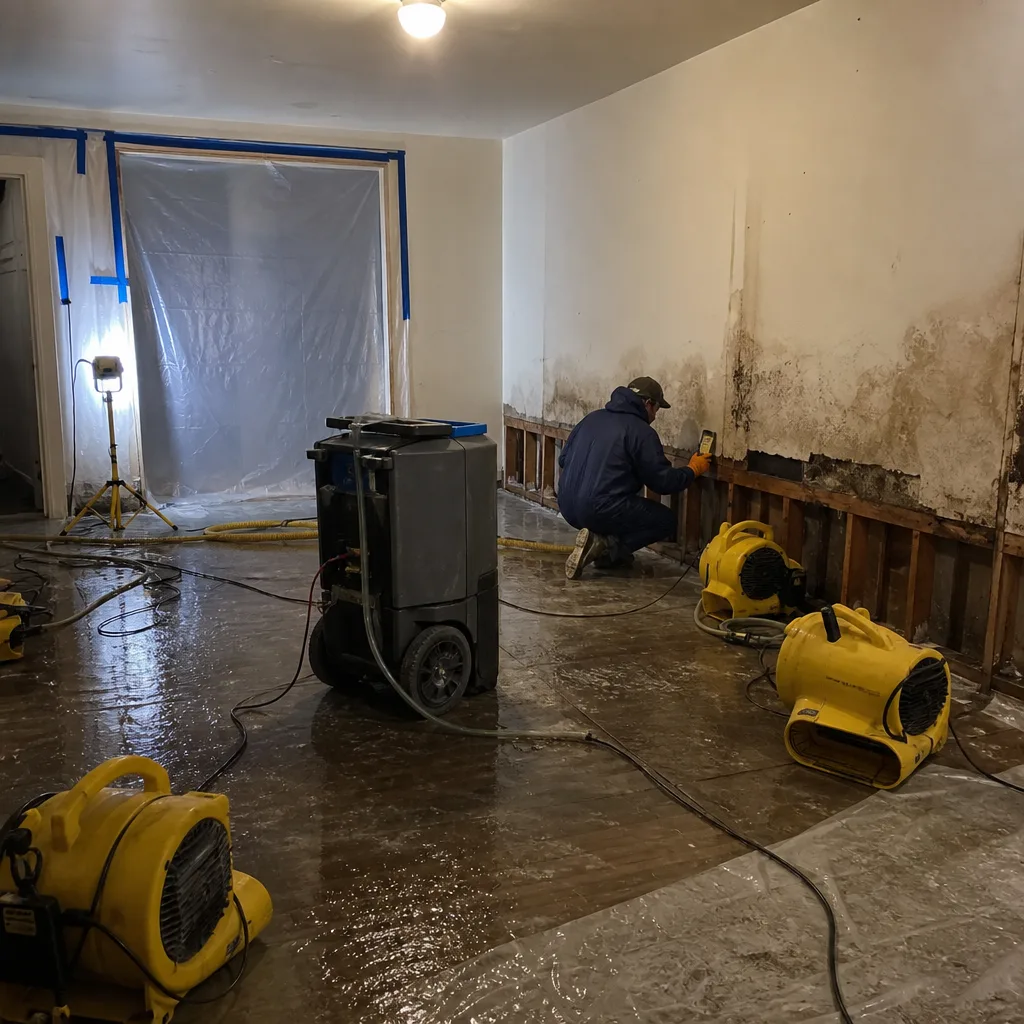
Des Moines’s older copper and galvanized supply lines, common in 1950s-1970s builds, fail at joints after decades of marine-air corrosion. A burst pipe in a bluff-plateau home often sends water into a crawl space with no vapor barrier, where it spreads across bare soil before the homeowner notices. We locate the full extent of migration with thermal imaging and moisture mapping, then scope drying and any necessary reconstruction in one written document. No piecemeal add-ons once the crew is inside - Haven Standard, Clause 1.
Ceiling & Roof Leak Water Damage
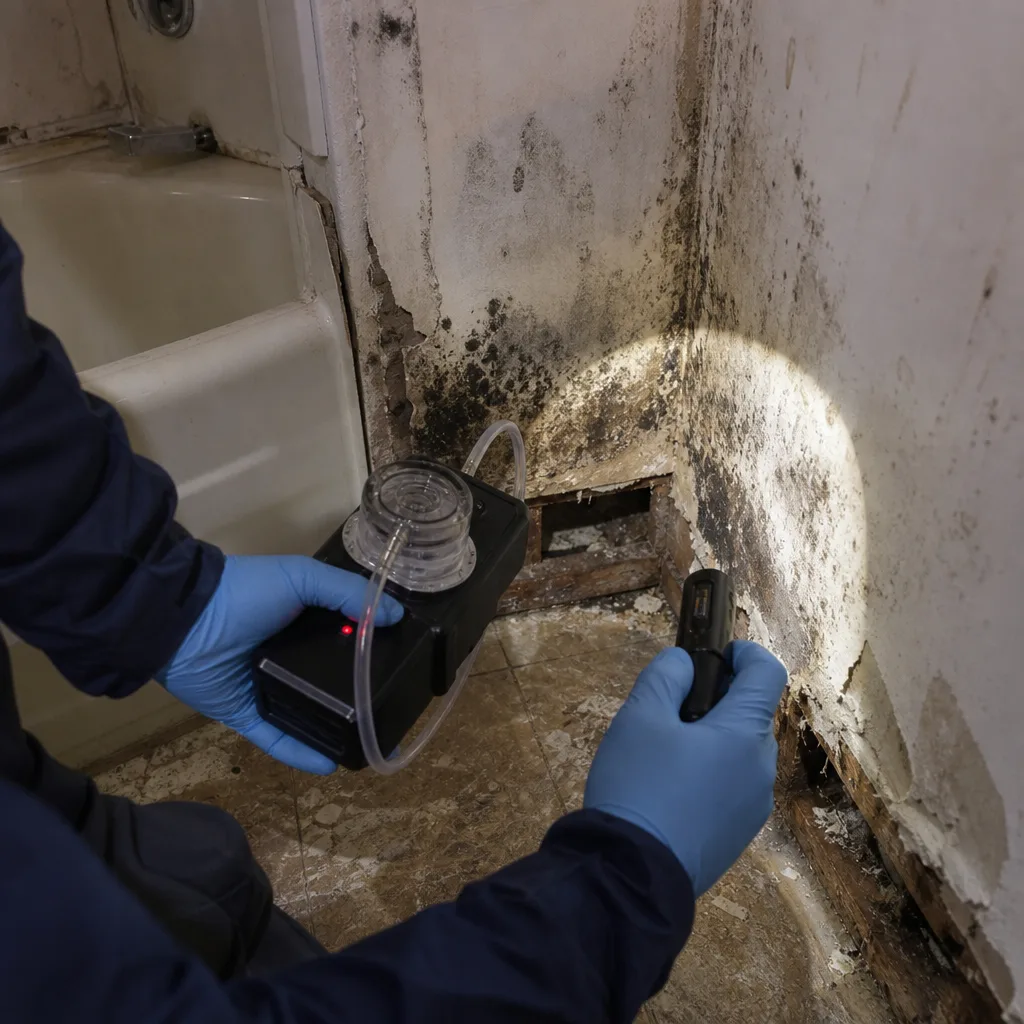
Roof leaks in Des Moines’s marine climate rarely announce themselves dramatically. More typical: a slow breach in original cedar shake or aging composite, where months of drizzle saturate insulation above a vaulted ceiling before staining appears. We trace the water path, document affected insulation and drywall with photos, and dry the cavity with Injectidry or direct-air systems without tearing out intact finishes unnecessarily.
What happens when you call
- 1
A real person answersNo phone trees - you reach a local pro.
- 2
You get an upfront price rangeHonest numbers before anyone is dispatched.
- 3
A background-checked tech heads outLicensed & insured, dispatched right away.
- 4
You approve before work beginsNothing starts until you say go.
BeforeAfterTrusted Brands We Service in Des Moines
Our equipment inventory includes professional-grade drying systems from Dri-Eaz, Phoenix, and Injectidry - brands that produce the documented airflow and dehumidification capacity required for IICRC-compliant drying logs. We don’t rent equipment by the day and hope for the best; we own our fleet, maintain it to manufacturer spec, and size each deployment to the specific cubic footage and material class of your Des Moines home. That ownership model means no delay waiting for third-party delivery when a crawl space is still taking on water.
Common Water Damage Restoration Problems We See in Des Moines Homes
- Crawl spaces that never fully dry. The 1950s-1970s ranch and split-level stock across Des Moines was built with unlined crawl spaces and minimal vapor barriers. Persistent Puget Sound humidity re-wets joists as fast as dehumidification pulls moisture out, creating a chronic cycle that produces mold and dry rot between major rain events.
- Slope-driven foundation cracks missed on initial scope. Crews treat the wet crawl space as a standalone extraction job and miss the hairline footing crack that opened when bluff soils saturated. The structure keeps moving after the space is dry, and new cracks appear within a season.
- Incomplete moisture mapping at rim joists and sill plates. Drying logs that stop at the crawl-space air reading skip the critical junction where wood framing meets masonry foundation. Hidden Category 2 or 3 water feeds dry rot in this gap for months, especially in homes on the drainage paths that channel runoff from the Des Moines plateau.
- Storm drain backups during atmospheric river events. The steep ravines and older catch basin infrastructure that drain Des Moines’s bluff neighborhoods toward Puget Sound can overload during Pacific storm systems, pushing water into basements and crawl spaces that had no previous flooding history.
Pricing for Water Damage Restoration in Des Moines, WA
We publish ranges because Haven Standard, Clause 1 requires a written price before work starts - and that price should never arrive as a surprise.
| Service | Typical Range in Des Moines |
|---|---|
| Emergency water extraction (crawl space or basement) | $1,200 - $2,800 |
| Structural drying & dehumidification (3-5 day standard) | $1,800 - $3,800 |
| Flood cleanup with Category 2/3 contamination | $2,500 - $5,500 |
| Burst pipe restoration with limited material removal | $2,200 - $4,800 |
| Basement water removal (finished, with content handling) | $3,200 - $6,500 |
| Ceiling/roof leak drying (cavity drying, limited demo) | $1,500 - $3,400 |
What moves a Des Moines job toward the higher end: unlined crawl spaces requiring vapor-barrier installation, Category 3 contamination from sewage backup or prolonged standing water, slope-driven structural damage requiring engineering documentation, and homes on the Marine View Drive corridor where access and containment are more complex. Every estimate is free, delivered in writing, and valid for 30 days. Call (360) 469-6341 for an exact quote on your specific loss.
We Also Serve Cities Near Des Moines
Our crews work the full corridor from Seattle through South King County, including Des Moines, Renton, Tukwila, SeaTac, and Kent. Dispatch and scheduling are coordinated from our Seattle office, with local response to each city. The bluff-plateau geography that shapes Des Moines’s water damage patterns extends partially into northern Kent and SeaTac, while Renton and Tukwila present their own drainage and housing-stock profiles that our teams know from repeated documentation.
Serving Des Moines, WA - Our Local Coverage Area
We’re based in the Des Moines area and know this community well. Use the map below to see our service coverage - if you’re nearby, we can almost certainly help.
FAQs - Water Damage Restoration in Des Moines
Your crawl space floods during light, prolonged drizzle because Des Moines’s marine climate delivers moisture as months of saturated soil and fog, not just dramatic storms. The 1950s-1970s ranch and split-level stock was built with unlined crawl spaces and minimal drainage, so groundwater rises through bare soil during extended wet periods even without a heavy downpour. We see this pattern constantly in neighborhoods from Woodmont to the Redondo area - the crawl space takes on water not from a single event, but from a season of accumulated soil saturation. Call (360) 469-6341 and we’ll map the moisture source and deliver a written drying and prevention plan.
Yes - slope movement is a co-damage driver we check on every bluff-plateau and Marine View Drive job. The same rain stretch that pushes groundwater into your crawl space can shift foundation footings or crack retaining walls, so we document pre-loss structural condition with photos before any drying begins. We got a call from a homeowner on Marine View Drive whose crawl space was holding standing water after a week of drizzle and a plugged storm drain backed water up the slope. Our tech ran moisture mapping with a Dri-Eaz meter, pulled the water with a Phoenix extraction unit, set containment and air movers under the 1960s split-level, and caught a hairline crack in the footing that the slope movement had opened up; we documented pre-loss condition with drying logs before any drywall went back. Missing that crack would have meant drying a space that was actively moving. Call (360) 469-6341 for structural-aware scoping.
It’s a chronic envelope failure, not a storm issue. Your split-level’s rim joist sits at the junction of wood framing and masonry foundation, and in 1960s Des Moines construction that junction was rarely sealed to modern standards. Persistent Puget Sound humidity, combined with capillary rise through the foundation, delivers continuous moisture to this gap. After every rainy stretch you’re seeing the accumulated result, not a new event. We scope these jobs with moisture readings at the sill plate and rim joist, not just the crawl-space air, and our drying plans include vapor-barrier recommendations to break the cycle. Call (360) 469-6341 for a written assessment.
Water category determines what materials must be removed, what can be dried in place, and what documentation your insurer requires for payment. Category 1 (clean water from a supply line) allows more in-place drying; Category 2 (gray water with chemical or biological load) requires removal of porous materials; Category 3 (black water from sewage or ground flooding) demands full removal and antimicrobial treatment. Des Moines’s unlined crawl spaces and older drainage infrastructure mean standing water often degrades from Category 1 to Category 2 or 3 within 48-72 hours as it picks up soil contaminants and microbial growth. Our scopes specify the actual category found, not a default assumption, and we document the classification with photos for your claim file. Call (360) 469-6341 for category-specific pricing.
Mold colonization typically begins within 24-48 hours of water intrusion in Des Moines’s moderate temperatures and high ambient humidity. Our emergency response to Des Moines averages under 90 minutes, and we begin extraction immediately while documenting pre-loss condition. The marine climate here actually accelerates mold risk compared to drier inland regions - there’s no “dry day” pause that slows microbial growth. Daily moisture logs track our progress and provide the documentation your insurer needs to see that drying was initiated within the critical window. Call (360) 469-6341 for immediate dispatch; our live answer team is available 24 hours a day, 7 days a week.
Written by Alicia Brennan, Owner at Back to Dry Restoration, serving Des Moines since 2011.